- Animals
- Reptiles
- Snakes
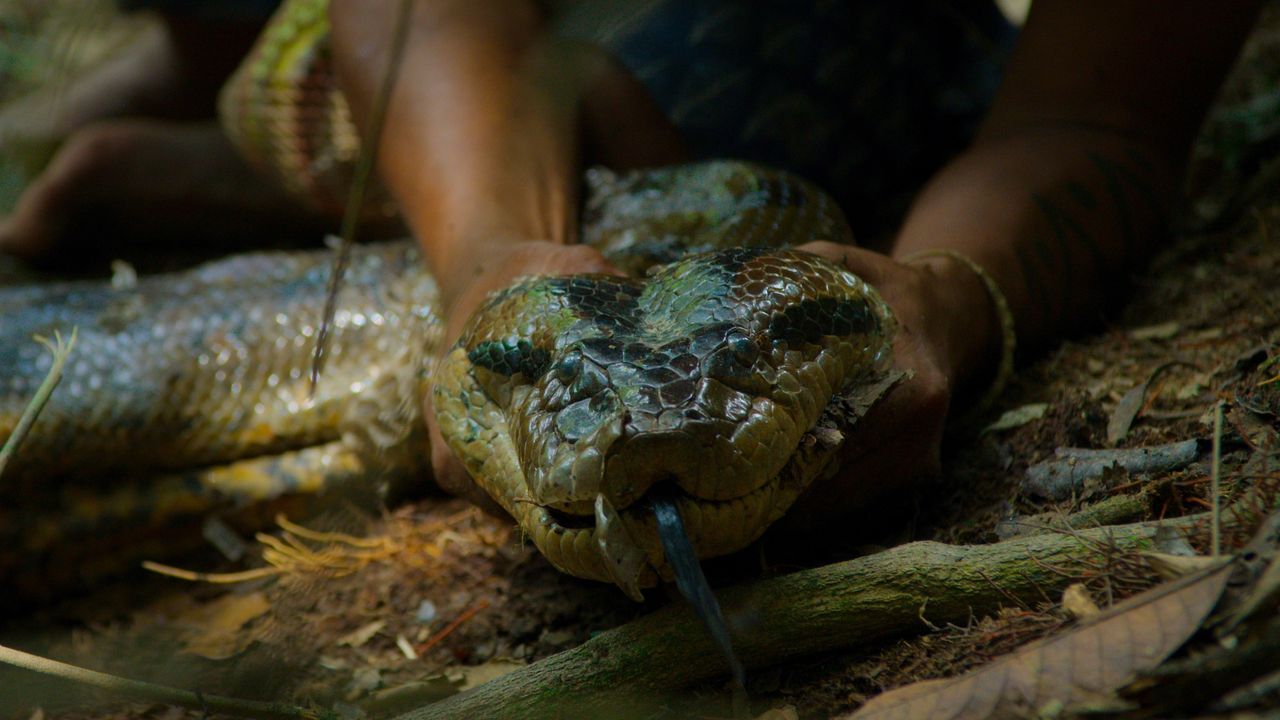
Scientists recently discovered a new species of green anaconda in the Amazon rainforest. A new Nat Geo series shows the moment they encountered this snake in the wild.
When you purchase through links on our site, we may earn an affiliate commission. Here’s how it works.
Share Share by:- Copy link
- X
In 2024, scientists announced the discovery of a newfound anaconda species in the Ecuadorian Amazon. Now, in a new nature series, filmmakers have released nail-biting, never-before-seen footage of the moment they encountered the snake in the wild.
The anaconda in the footage — which features in an episode of National Geographic's upcoming "Pole to Pole with Will Smith" docuseries — is a female measuring 16 to 17 feet (4.9 to 5.2 meters) long, Fry estimates in the show. There is a danger she might bite, says one of the Waorani guides who helps pin down the snake, even if green anacondas aren't venomous. Anacondas are constrictors, meaning they kill prey by wrapping their bodies tightly around it, suffocating the animal before swallowing it whole.
You may like-
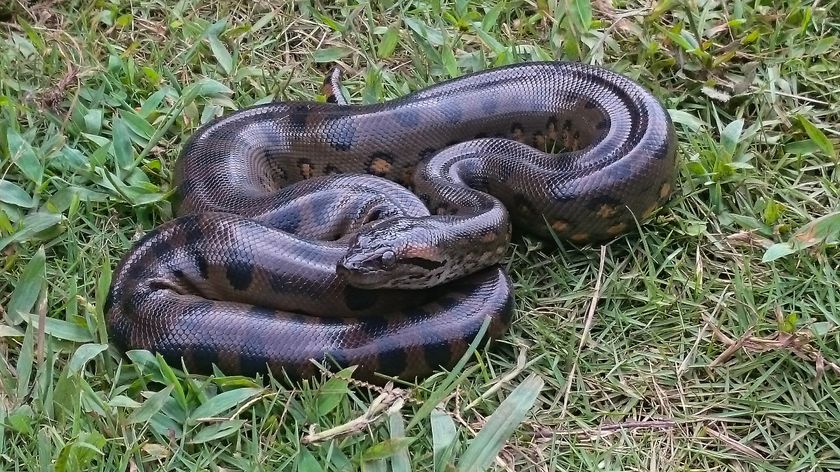 Anacondas became massive 12 million years ago — and it worked so well, they haven't changed size since
-
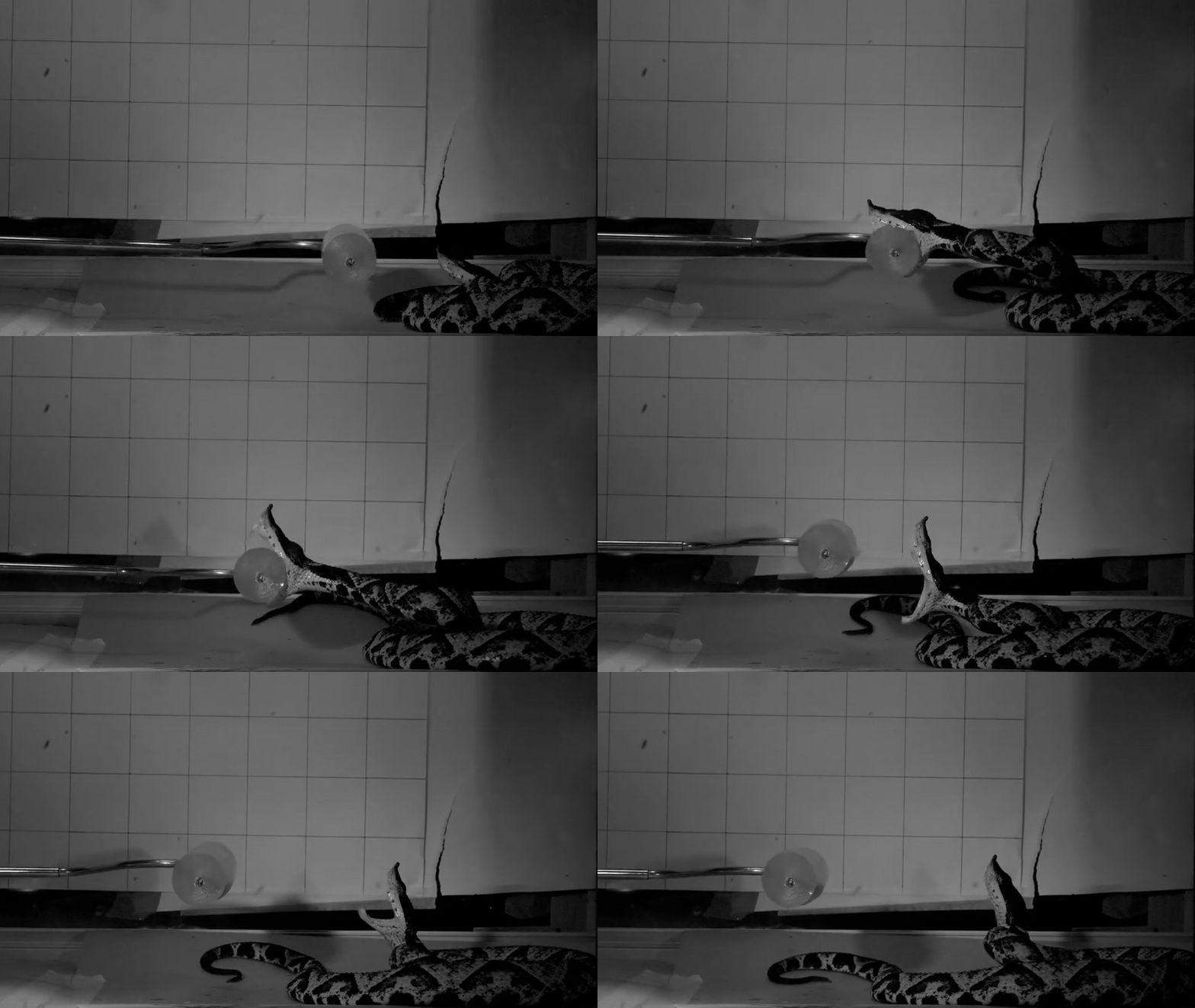 Venomous snake strikes captured in extreme detail through high-speed videos for first time
-
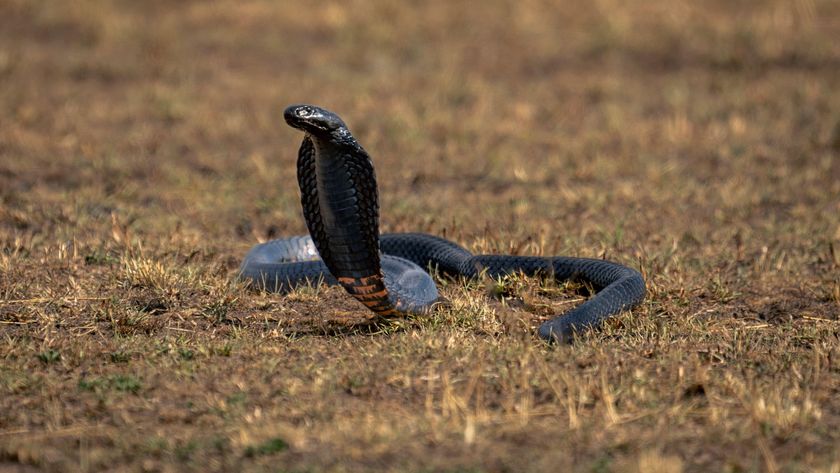 New antivenom works against 17 dangerous African snake species, study suggests
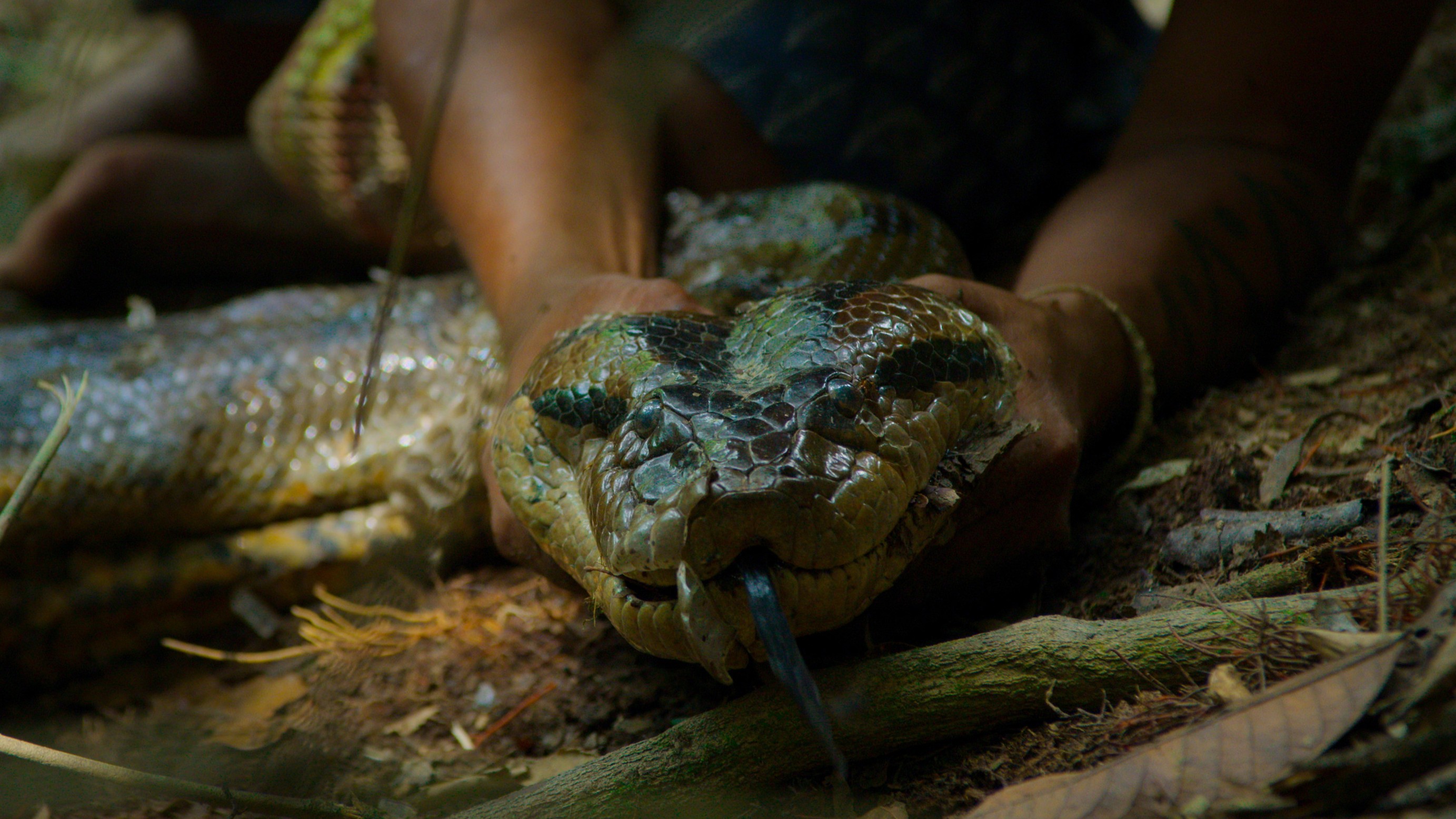
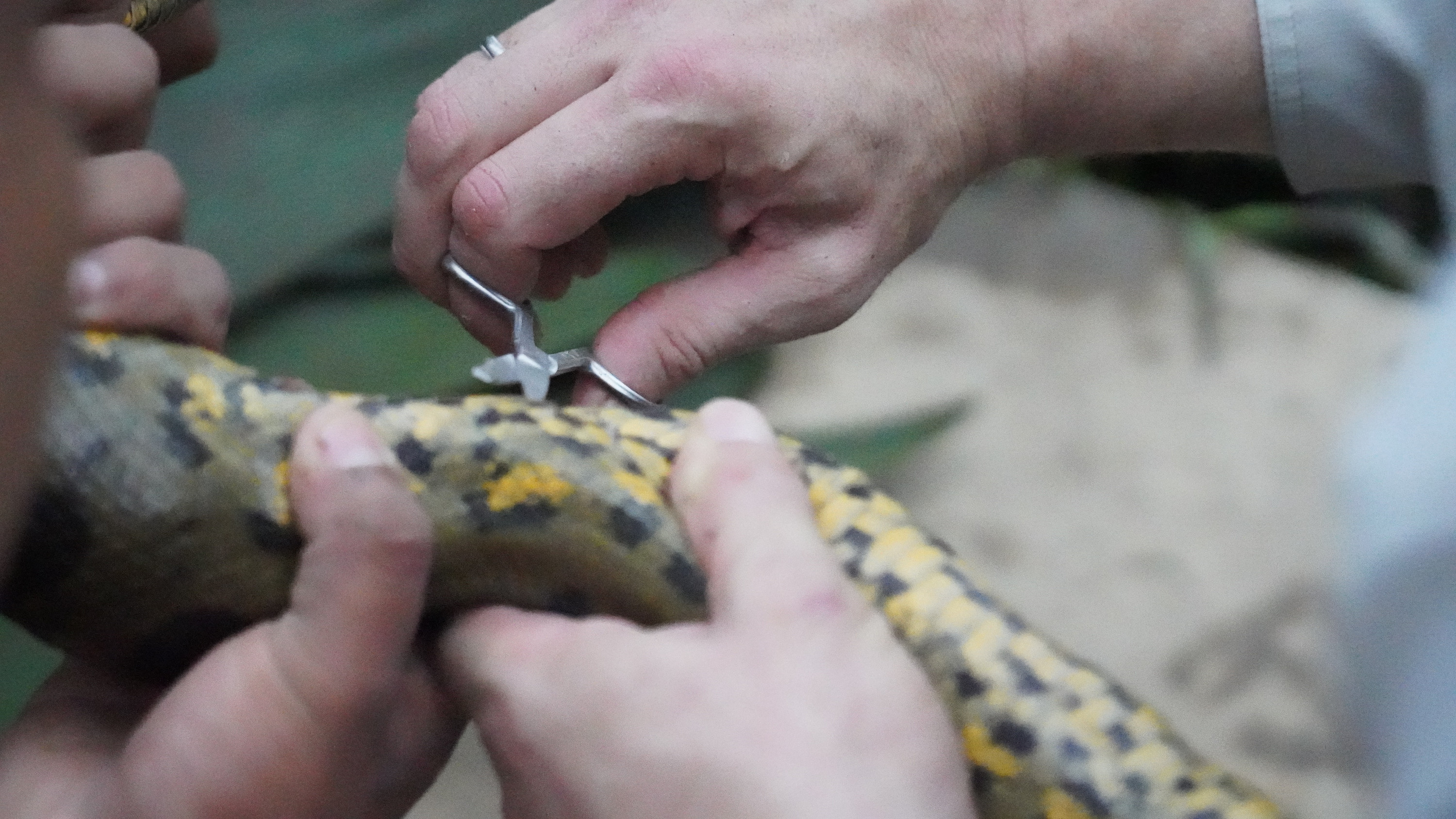
The scale sample and others taken in 2022 revealed that green anacondas, which were previously thought to all belong to one species, actually form two separate species: Eunectes murinus, the already-identified southern green anaconda, and Eunectes akayima, the newfound northern green anaconda.
"Finding a new species is so often not a case of actively searching but rather having rigorous scientific process in place so that serendipity can strike," Fry, who is a professor of toxicology at The University of Queensland in Australia, told Live Science in an email. "The research into the genetics of the iconic green anaconda is textbook in this regard."
Genetic analyses indicate that E. murinus and E. akayima diverged 10 million years ago. Since then, northern and southern green anacondas have accumulated thousands of genetic differences adding up to a whopping 5.5% of their total DNA. By comparison, the level of mismatch between human and ape DNA is about 2%.
As its name suggests, the northern green anaconda inhabits the Amazon's northern basin, which includes parts of Ecuador, Colombia, Venezuela, Trinidad, Guyana, Suriname and French Guiana. The southern green anaconda, on the other hand, is found in the Amazon's southern basin, which stretches across Brazil from Peru and Bolivia to French Guiana. Both species live in wetlands and rivers, spending most of their time submerged in water. Their olive-green coloring blends into their surroundings, which helps green anacondas ambush large prey such as capybaras (Hydrochoerus hydrochaeris), caimans and deer.
Sign up for the Live Science daily newsletter nowContact me with news and offers from other Future brandsReceive email from us on behalf of our trusted partners or sponsorsBy submitting your information you agree to the Terms & Conditions and Privacy Policy and are aged 16 or over.Green anacondas are the world's heaviest snakes, with some specimens weighing more than 550 pounds (250 kilograms) and exceeding 12 inches (30 centimeters) in girth. Female northern green anacondas grow the largest and heaviest, while their male counterparts have more slender bodies. This means female and male northern green anacondas hunt different prey and occupy different positions in the food chain, Fry said.
"Females and males live in the same environment, but they feed differently," he said.
The northern green anaconda is the fifth described anaconda species in the world — and there may be more hiding out there, Fry told Live Science. "Despite anacondas having a state of fame exceeding that of any other reptile, they are really poorly known," he said.
You may like-
New antivenom works against 17 dangerous African snake species, study suggests
-
 World's biggest spiderweb discovered inside 'Sulfur Cave' with 111,000 arachnids living in pitch black
-
 Scientists find rare tusked whale alive at sea for the first time — and shoot it with a crossbow
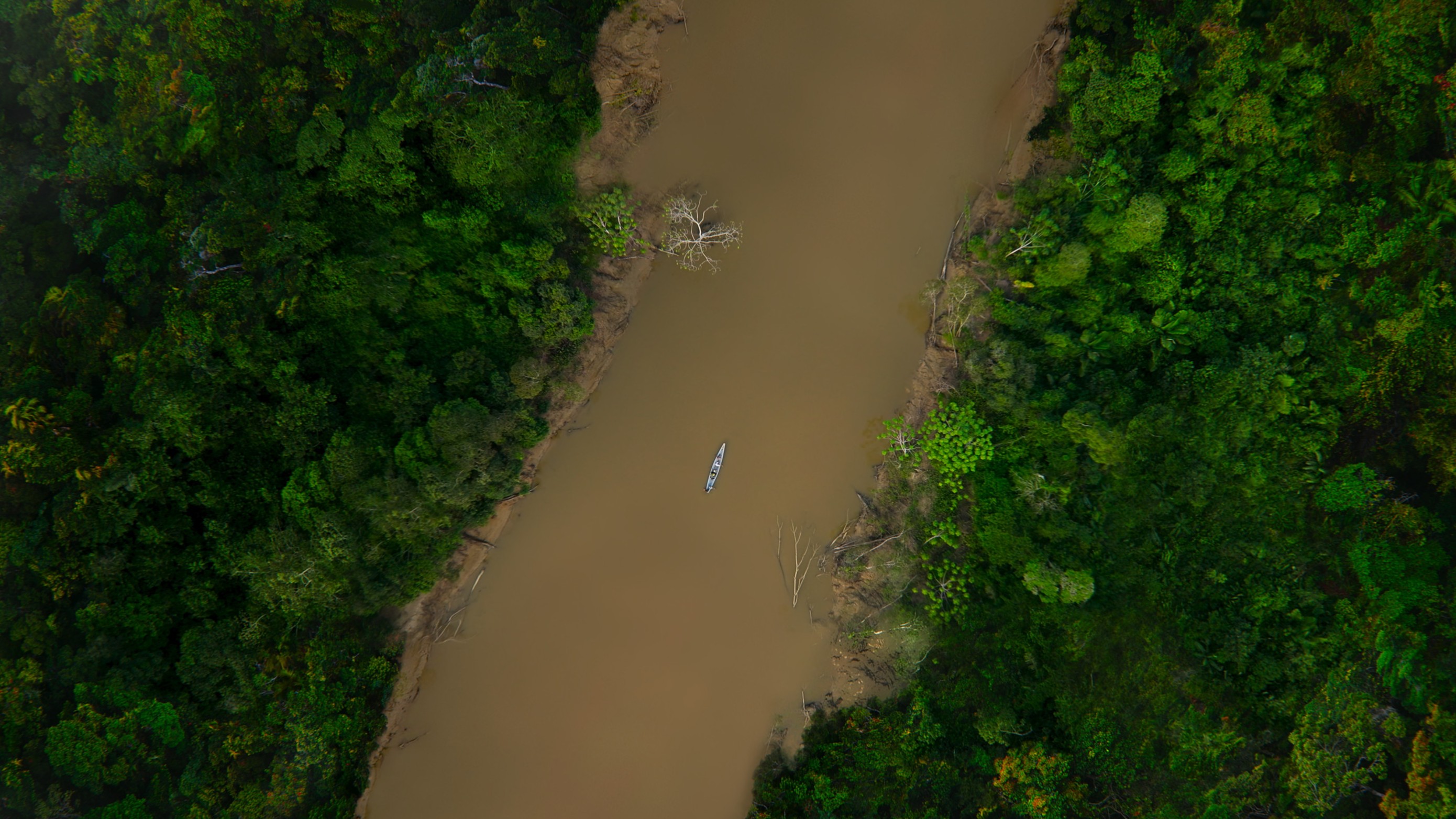
Knowledge of the northern green anaconda's existence is important in and of itself, but the difference in male and female diets could also give clues about the health of the ecosystem — and the people who live in it, Fry said. Female northern green anacondas feed lower in the food chain than males do, preying on animals such as deer. The males eat more predatory fish and caimans, meaning they accumulate more toxins leftover in the environment from events like oil spills than females do, he said.
Male northern green anacondas' diet resembles that of humans living in the Amazon. Therefore, the concentration of toxins in these anacondas provides an estimate of the pollution that people are exposed to — and that pollution is high, Fry said.
RELATED STORIES—Anacondas became massive 12 million years ago — and it worked so well, they haven't changed size since
—Venomous snake strikes captured in extreme detail through high-speed videos for first time
—Why do snakes shed their skin?
"The concentrations of the heavy metals cadmium and lead, potent endocrine disruptors that are the signature of oil spills, were over 1000 percent higher in males than females," he said. "That is not a subtle difference. That is a warning flare."
In light of these findings, Fry is developing a wild food guide for the Waorani. "Recommendations will include pregnant women and young children avoiding top-level predators likely to carry higher contaminant loads, such as arapaima and arowana [two types of predatory freshwater fish]," he said.
"Pole to Pole with Will Smith" premieres Jan. 13 on National Geographic, and Jan. 14 on Disney+ and Hulu.
TOPICS Amazon rainforest newfound species Sascha PareSocial Links NavigationStaff writer
 Sascha is a U.K.-based staff writer at Live Science. She holds a bachelor’s degree in biology from the University of Southampton in England and a master’s degree in science communication from Imperial College London. Her work has appeared in The Guardian and the health website Zoe. Besides writing, she enjoys playing tennis, bread-making and browsing second-hand shops for hidden gems.
Show More CommentsYou must confirm your public display name before commenting
Please logout and then login again, you will then be prompted to enter your display name.
Logout Read more New antivenom works against 17 dangerous African snake species, study suggests
 World's biggest spiderweb discovered inside 'Sulfur Cave' with 111,000 arachnids living in pitch black
 Scientists find rare tusked whale alive at sea for the first time — and shoot it with a crossbow
 Newly discovered toads skip the tadpole stage and give birth to live 'toadlets'
 240 million-year-old 'warrior' crocodile ancestor from Pangaea had plated armor — and it looked just like a dinosaur
 Tiny spiders that build giant 'puppet' decoys from disembodied prey discovered in Peru and Philippines
Latest in Snakes
Tiny spiders that build giant 'puppet' decoys from disembodied prey discovered in Peru and Philippines
Latest in Snakes
 Anacondas became massive 12 million years ago — and it worked so well, they haven't changed size since
Venomous snake strikes captured in extreme detail through high-speed videos for first time
Anacondas became massive 12 million years ago — and it worked so well, they haven't changed size since
Venomous snake strikes captured in extreme detail through high-speed videos for first time
 Scientists could soon create a 'universal antivenom.' But would it save lives?
 Cold snap in Florida made Burmese python puke up a whole deer
 Scientists discover Burmese pythons have never-before-seen cells that help them digest entire skeletons
 Florida bobcat bites the head off of 13-foot Burmese python in the Everglades
Latest in News
Florida bobcat bites the head off of 13-foot Burmese python in the Everglades
Latest in News
 Tiny bump on 7 million-year-old fossil suggests ancient ape walked upright — and might even be a human ancestor
 1,100-year-old mummy found in Chile died of extensive injuries when a turquoise mine caved in, CT scans reveal
 NASA announces unprecedented return of sick ISS astronaut and crew
 James Webb telescope confirms a supermassive black hole running away from its host galaxy at 2 million mph, researchers say
 Hubble telescope discovers 'Cloud-9,' a dark and rare 'failed galaxy' that's unlike anything seen before
 Orbiting satellites could start crashing into one another in less than 3 days, theoretical new 'CRASH Clock' reveals
LATEST ARTICLES
Orbiting satellites could start crashing into one another in less than 3 days, theoretical new 'CRASH Clock' reveals
LATEST ARTICLES- 1Tiny bump on 7 million-year-old fossil suggests ancient ape walked upright — and might even be a human ancestor
- 2Avenue of the Baobabs: Madagascar's natural monument with dozens of 'mother of the forest' trees
- 31,100-year-old mummy found in Chile died of extensive injuries when a turquoise mine caved in, CT scans reveal
- 4Jupiter will outshine every star in the sky this weekend — how to see the 'king of planets' at opposition
- 5Science history: Sophie Germain, first woman to win France's prestigious 'Grand Mathematics Prize' is snubbed when tickets to award ceremony are 'lost in the mail' — Jan. 9, 1816