- Space
- Astronomy
The Quadrantids will be harder to see than usual due to the bright full moon. Here's how to get the best views.
When you purchase through links on our site, we may earn an affiliate commission. Here’s how it works.
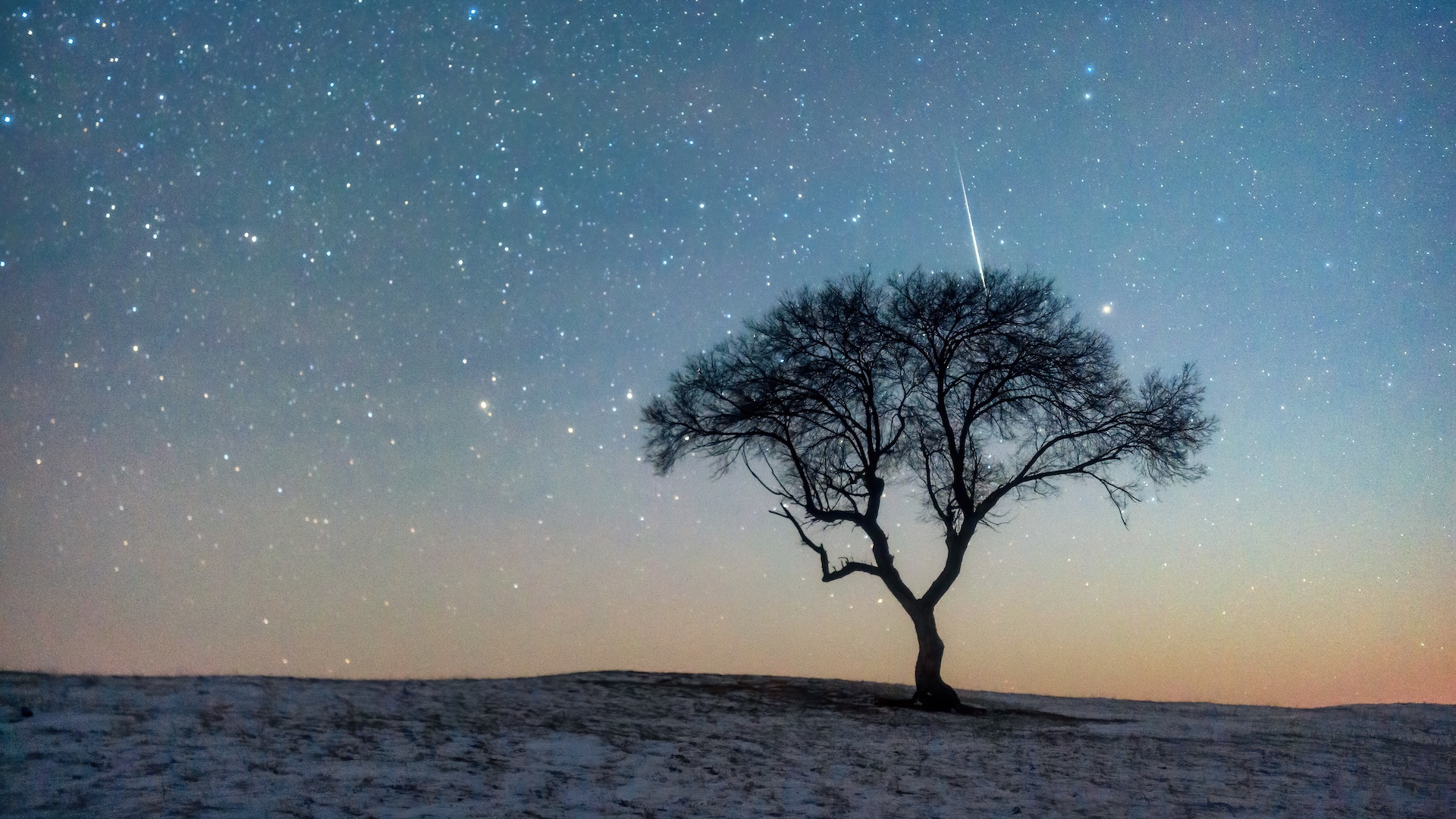
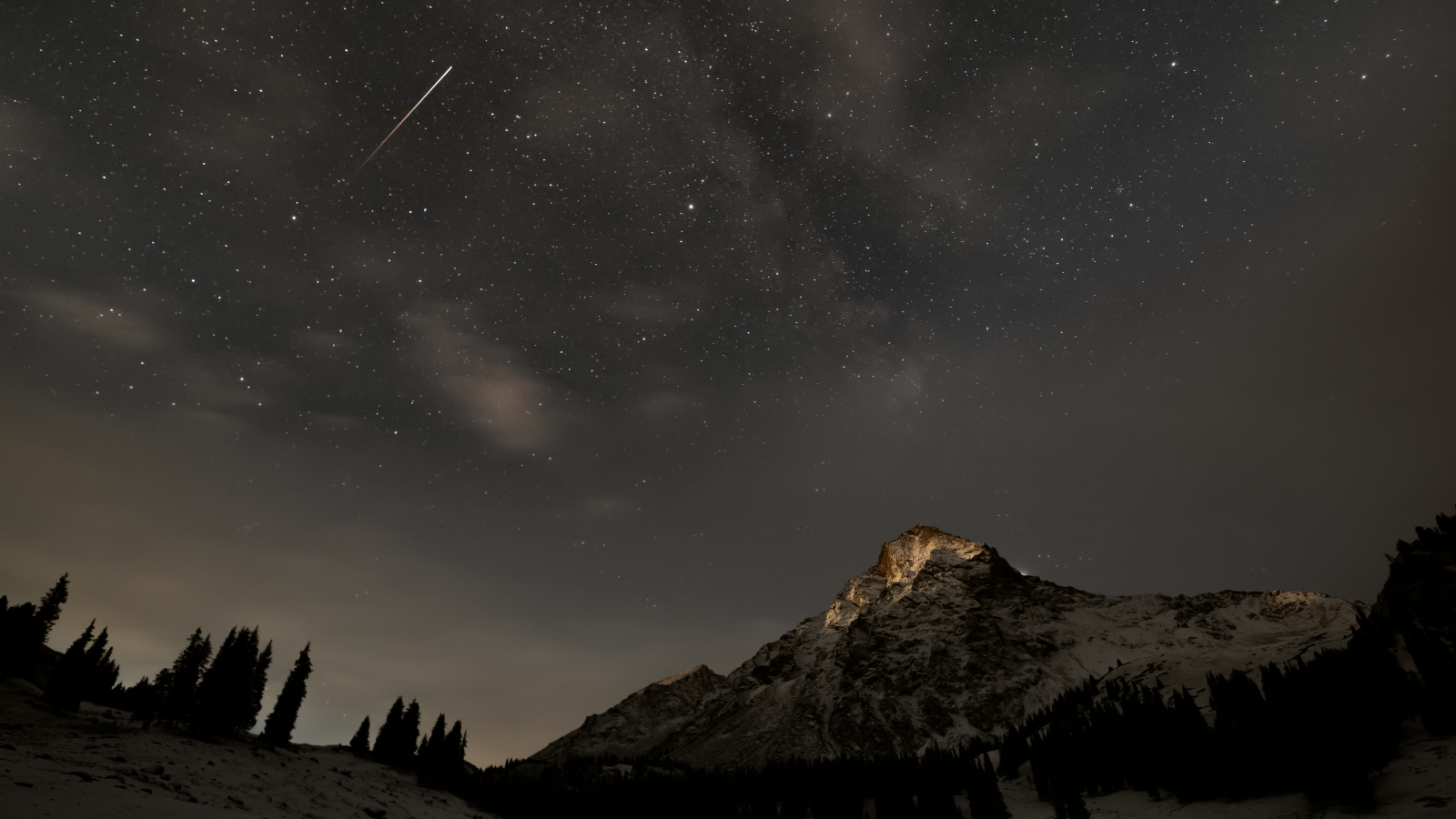 The Quadrantid meteor shower will peak on Jan. 3, 2026.
(Image credit: Yuhan Liao/Getty Images)
Share
Share by:
The Quadrantid meteor shower will peak on Jan. 3, 2026.
(Image credit: Yuhan Liao/Getty Images)
Share
Share by:
- Copy link
- X
Skywatchers are set for a double helping of celestial sights on Saturday, Jan. 3, when the rise of the first full moon of 2026 will be followed shortly by the peak of one of the strongest meteor showers of the year.
Although it's not as famous as August's Perseids or December's Geminids, January's Quadrantids can be just as prolific. This year, they will be active from Dec. 28 through Jan. 12 and will peak on Jan. 3 starting around 4 p.m. EST (21:00 UTC).
You may like-
 Ursid meteor shower 2025: When and where to see 'shooting stars' on the longest night of the year
-
 See up to 150 'shooting stars' per hour this weekend as the Geminid meteor shower reaches its stunning peak
-
 Orionids 2025: Meteor shower caused by Halley's Comet peaks as two new comets cross the sky
It's a narrow peak, lasting about six hours, so North American skywatchers should start looking as soon as it gets dark. Although shooting stars from the Quadrantids tend to be relatively faint, they can often produce bright "fireballs."
Quadrantids can be seen anywhere in the night sky, but they appear to come from the northern sky — specifically, the constellation Boötes, part of which was formerly called Quadrans Muralis (hence the name of this meteor shower). The best way to visualize this radiant origin point for the Quadrantids is to look at the night sky around the handle of the famous Big Dipper asterism.
RELATED STORIES—How to photograph a meteor shower
—'Miracle' photo captures Comet Lemmon and meteor seemingly entwined over Earth
—New ultraviolet image of comet 3I/ATLAS could help reveal what it's made of
The Quadrantid meteor shower happens when, each January, Earth travels through a narrow stream of dust and debris orbiting the sun. The stream is thought to come from an object called 2003 EH, which may be an asteroid or an extinct comet and takes 5.5 years to orbit the sun from around the same distance as Earth (but safely beyond it), according to EarthSky.
The next notable meteor shower wil be the Lyrids in April. When the Lyrid meteor shower peaks on the night of April 21-22 during a crescent moon, the sky conditions will be ideal for seeing about 18 shooting stars per hour.
To maximize the number of meteors you'll see during either event, find a location with a clear view of as much of the night sky as possible. The bright moon during the Quadrantids will make it pointless to attempt escaping to dark skies, but try to keep the moon behind you to maximize your chances of spotting shooting stars.
 Jamie CarterSocial Links NavigationLive Science contributor
Jamie Carter is a freelance journalist and regular Live Science contributor based in Cardiff, U.K. He is the author of A Stargazing Program For Beginners and lectures on astronomy and the natural world. Jamie regularly writes for Space.com, TechRadar.com, Forbes Science, BBC Wildlife magazine and Scientific American, and many others. He edits WhenIsTheNextEclipse.com.
Show More CommentsYou must confirm your public display name before commenting
Please logout and then login again, you will then be prompted to enter your display name.
Logout Read more Ursid meteor shower 2025: When and where to see 'shooting stars' on the longest night of the year
 See up to 150 'shooting stars' per hour this weekend as the Geminid meteor shower reaches its stunning peak
 Orionids 2025: Meteor shower caused by Halley's Comet peaks as two new comets cross the sky
 This week's Leonid meteor shower could be one of the best in years. Here's why.
 Stargazing over the Christmas holidays 2025: 10 great reasons to look up
 January 'Wolf Supermoon': How to see the full moon rise with Jupiter this weekend
Latest in Astronomy
January 'Wolf Supermoon': How to see the full moon rise with Jupiter this weekend
Latest in Astronomy
 Vera C. Rubin Observatory discovers enormous, record-breaking asteroid in first 7 nights of observations
 NASA telescope combines 100 maps of the universe into one, promising huge discoveries
 'How can all of this be happening?': Scientists spot massive group of ancient galaxies so hot they shouldn't exist
 The moon has been secretly feasting on Earth's atmosphere for billions of years
 'Wolf Supermoon' gallery: See the first full moon of 2026 in pictures from across the world
 NASA spacecraft takes milestone 100,000th image of Mars (photo)
Latest in News
NASA spacecraft takes milestone 100,000th image of Mars (photo)
Latest in News
 New US food pyramid recommends very high protein diet, beef tallow as healthy fat option, and full-fat dairy
 Rare 2,000-year-old war trumpet, possibly linked to Celtic queen Boudica, discovered in England
 Leonardo da Vinci's DNA may be embedded in his art — and scientists think they've managed to extract some
 9,500-year-old cremation pyre of a hunter-gatherer woman is the oldest of its kind in the world
 One of the last Siberian shamans was an 18th-century woman whose parents were related, DNA study reveals
 Huge ice dome in Greenland vanished 7,000 years ago — melting at temperatures we're racing toward today
LATEST ARTICLES
Huge ice dome in Greenland vanished 7,000 years ago — melting at temperatures we're racing toward today
LATEST ARTICLES- 1Vera C. Rubin Observatory discovers enormous, record-breaking asteroid in first 7 nights of observations
- 2New US food pyramid recommends very high protein diet, beef tallow as healthy fat option, and full-fat dairy
- 3Rare 2,000-year-old war trumpet, possibly linked to Celtic queen Boudica, discovered in England
- 460,000-year-old poison arrows from South Africa are the oldest poison weapons ever discovered
- 5Leonardo da Vinci's DNA may be embedded in his art — and scientists think they've managed to extract some