- Archaeology
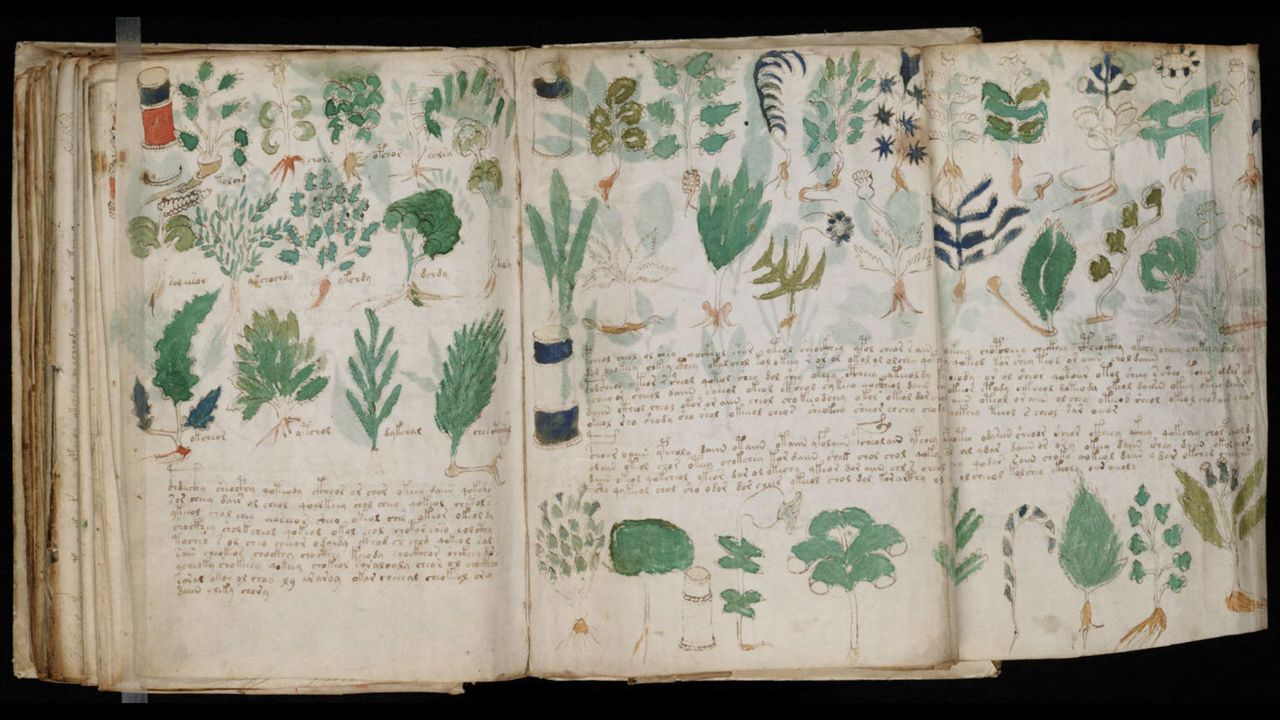
A newly invented cipher may shed light on how the mysterious Voynich manuscript was made in medieval times.
When you purchase through links on our site, we may earn an affiliate commission. Here’s how it works.
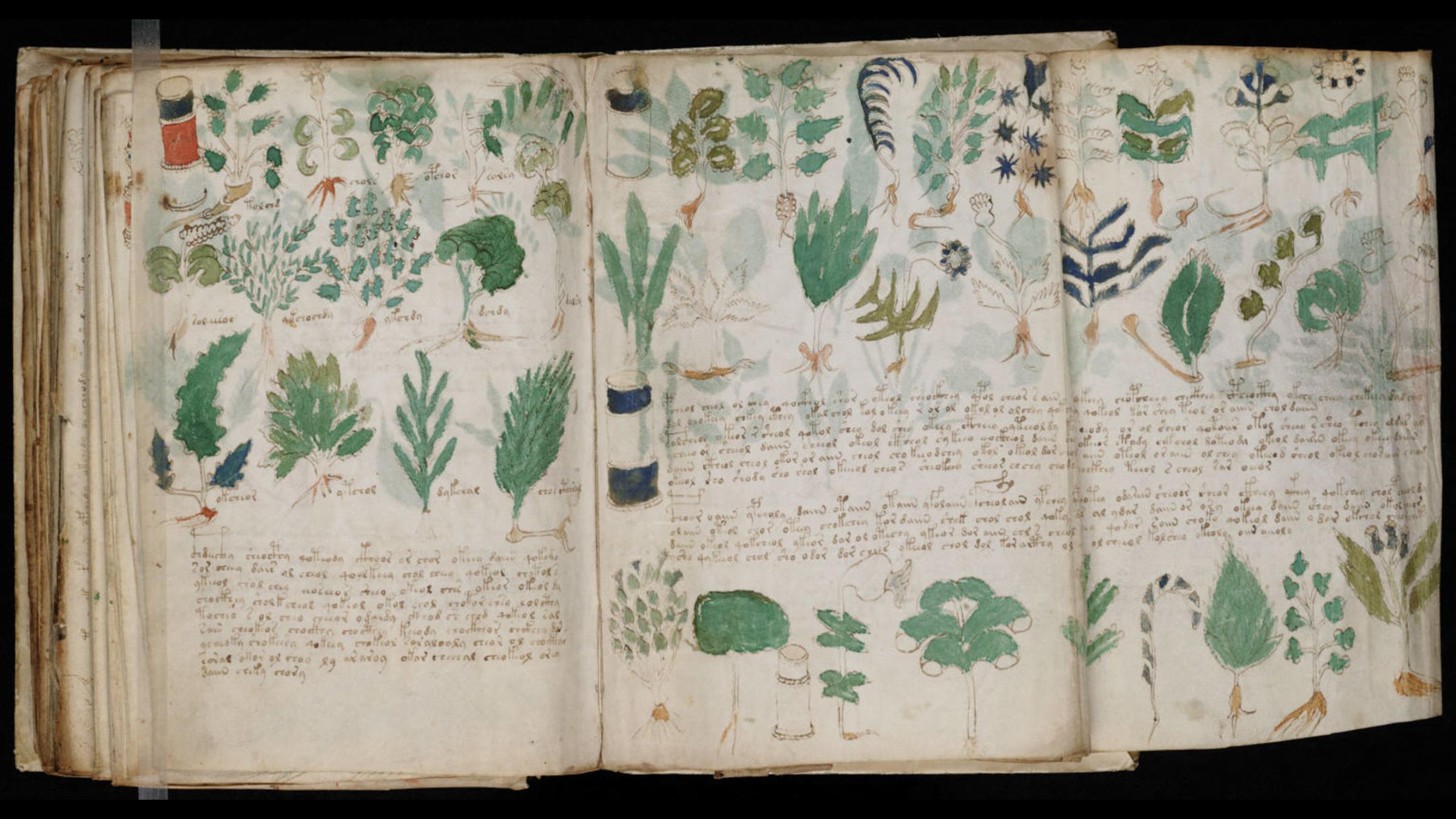 The Voynich manuscript has never been deciphered.
(Image credit: Art Collection 2 via Alamy)
Share
Share by:
The Voynich manuscript has never been deciphered.
(Image credit: Art Collection 2 via Alamy)
Share
Share by:
- Copy link
- X
A unique cipher that uses playing cards and dice to turn languages into glyphs produces text eerily similar to the glyphs in the Voynich manuscript, a new study shows. The finding suggests that an equivalent cipher could have been used to create the mysterious medieval manuscript.
The new cipher — called "Naibbe," from the name of a 14th-century Italian card game — does not decode the medieval Voynich manuscript, but it offers an idea for how the manuscript was made.
You may like-
 Scientists may finally have an explanation for the centuries-old 5,200 mystery holes in the Peruvian Andes
-
 Massive 3,000-year-old Maya site in Mexico depicts the cosmos and the 'order of the universe,' study claims
-
 13th-century Christian songbook made of furry sealskin may be Norway's oldest surviving book
In the new study, published Nov. 26 in the journal Cryptologia, science journalist Michael Greshko investigated one way the manuscript may have come together. He told Live Science that he got the idea for the Naibbe cipher while researching stories about the Voynich manuscript. "It is this fascinatingly mysterious medieval artifact," he said.
Naibbe first uses the number from the throw of a die to break a block of Italian or Latin into single and double letters — so "gatto" (Italian for "cat") could become "g","at" and "to." The cipher then uses the draw of a playing card to determine which of six different tables is used to encrypt the letters into "Voynichese" — the strange and undeciphered glyphs that are apparently grouped into words in the manuscript. The tables are "weighted" by the corresponding number of cards so that the statistical occurrence of the mock-Voynichese glyphs is the same as seen in the manuscript itself.
Greshko's effort is among the leading attempts to explain how the manuscript was made. But it still only approximated Voynichese text, rather than fully replicating it, he said.
Mysterious manuscript
The Voynich manuscript is named after the Polish, British and American book collector Wilfrid Voynich, who acquired it in 1912 from a collection compiled by a Jesuit college near Rome. It is now housed at Yale University.
Sign up for the Live Science daily newsletter nowContact me with news and offers from other Future brandsReceive email from us on behalf of our trusted partners or sponsorsBy submitting your information you agree to the Terms & Conditions and Privacy Policy and are aged 16 or over.The manuscript now lies at a nexus of attempts to understand lost languages, yet experts are not entirely sure if Voynichese is even real.
One theory, taken seriously, is that the manuscript is a medieval hoax, illustrated with suitably mysterious and salacious drawings, and that the text of Voynichese glyphs is completely meaningless.
The hoax theory has grown stronger in recent years as more attempts to decipher Voynichese — some of which have used machine learning and other computerized artificial intelligence methods — have failed to crack the code, if there is a code.
You may like-
Scientists may finally have an explanation for the centuries-old 5,200 mystery holes in the Peruvian Andes
-
Massive 3,000-year-old Maya site in Mexico depicts the cosmos and the 'order of the universe,' study claims
-
13th-century Christian songbook made of furry sealskin may be Norway's oldest surviving book
But theories that Voynichese is based on a real language and can be deciphered are still prominent, and Greshko's Naibbe cipher is one of the closest attempts yet.
The mock-Voynichese output of the Naibbe cipher has several important similarities to true Voynichese, including the statistical frequencies of glyphs, the length of Voynichese "words," and certain rules of the manuscript's mysterious grammar.
Those commonalities suggested that a similar method was used to create the original Voynich manuscript, Greshko said. "The Naibbe cipher is almost certainly not the way that the manuscript was constructed," he said. "But what it does provide is a fully documented way to reliably go between Latin and something that behaves kind of like the Voynich manuscript."
Cipher technology
Dice and playing cards were chosen as sources of randomness because it was essential for the cipher to be "hand-doable" with the technology of the time, Greshko said. At one point, he thought of taking tokens from a bag — a bit like a bingo caller — but he realized that playing cards were known in Europe at that time.
And while the Naibbe cipher does not faithfully replicate all features of Voynichese — such as the exact incidence of Voynichese words and where they appear in a line or paragraph — the discrepancies could be analyzed for potential relevance, he said.
"My hope is that this becomes adopted as a computational benchmark," Greshko said. "The points of difference between the cipher and the manuscript may point the way to how the text was actually created."
Former satellite engineer René Zandbergen, a renowned expert on the Voynich manuscript who was not directly involved in Greshko's study, said he appreciated Greshko's efforts to create an encoding method to approximate Voynichese.
Related Stories—How do we decipher Egyptian hieroglyphics and other ancient languages?
—AI is deciphering a 2,000-year-old 'lost book' describing life after Alexander the Great
—Mary, Queen of Scots' cryptic prison letters finally deciphered
But Greshko "also makes it clear that he is not suggesting that this is how the manuscript text was generated," Zandbergen said in an email. "He just demonstrates that such a method can be found, and we may assume that there may be others."
Zandbergen added that he is "essentially undecided" about whether the Voynichese text is meaningful or a hoax.
"Some people argue that 'nobody would do that,' but I think that argument is too simplistic," he said. "A more problematic point is that I find it very hard to imagine how it could have been done."
Tom MetcalfeSocial Links NavigationLive Science ContributorTom Metcalfe is a freelance journalist and regular Live Science contributor who is based in London in the United Kingdom. Tom writes mainly about science, space, archaeology, the Earth and the oceans. He has also written for the BBC, NBC News, National Geographic, Scientific American, Air & Space, and many others.
Show More CommentsYou must confirm your public display name before commenting
Please logout and then login again, you will then be prompted to enter your display name.
Logout Read more Scientists may finally have an explanation for the centuries-old 5,200 mystery holes in the Peruvian Andes
 Massive 3,000-year-old Maya site in Mexico depicts the cosmos and the 'order of the universe,' study claims
 13th-century Christian songbook made of furry sealskin may be Norway's oldest surviving book
 Scientists are debating a 70-year-old UFO mystery as new images come to light
 'Artificial intelligence' myths have existed for centuries – from the ancient Greeks to a pope's chatbot
 Stunningly preserved Roman-era mosaic in UK depicts Trojan War stories — but not the ones told by Homer
Latest in Archaeology
Stunningly preserved Roman-era mosaic in UK depicts Trojan War stories — but not the ones told by Homer
Latest in Archaeology
 1,100-year-old burials of elite warriors and their ornate weapons discovered in Hungary
 'Gospel stories themselves tell of dislocation and danger': A historian describes the world Jesus was born into
 1.5 million-year-old Homo erectus face was just reconstructed — and its mix of old and new traits is complicating the picture of human evolution
 18,000 years ago, ice age humans built dwellings out of mammoth bones in Ukraine
'Artificial intelligence' myths have existed for centuries – from the ancient Greeks to a pope's chatbot
18,000 years ago, ice age humans built dwellings out of mammoth bones in Ukraine
'Artificial intelligence' myths have existed for centuries – from the ancient Greeks to a pope's chatbot
 Centuries-old 'trophy head' from Peru reveals individual survived to adulthood despite disabling birth defect
Latest in News
Centuries-old 'trophy head' from Peru reveals individual survived to adulthood despite disabling birth defect
Latest in News
 'How can all of this be happening?': Scientists spot massive group of ancient galaxies so hot they shouldn't exist
 Advanced alien civilizations could be communicating 'like fireflies' in plain sight, researchers suggest
 The moon has been secretly feasting on Earth's atmosphere for billions of years
 US government overhauls the childhood vaccine schedule in unprecedented move
 'Wolf Supermoon' gallery: See the first full moon of 2026 in pictures from across the world
 First-ever 'superkilonova' double star explosion puzzles astronomers
LATEST ARTICLES
First-ever 'superkilonova' double star explosion puzzles astronomers
LATEST ARTICLES 1Diagnostic dilemma: Giant 'stone' in a man's bladder looked like an ostrich egg
- 2'How can all of this be happening?': Scientists spot massive group of ancient galaxies so hot they shouldn't exist
- 3Advanced alien civilizations could be communicating 'like fireflies' in plain sight, researchers suggest
- 4What to buy to start a fitness journey (and save some money in the process)
- 5The moon has been secretly feasting on Earth's atmosphere for billions of years