- Animals
- Extinct species
- Dinosaurs
The dino lived during the Late Cretaceous alongside other hadrosaurids in present-day New Mexico.
When you purchase through links on our site, we may earn an affiliate commission. Here’s how it works.
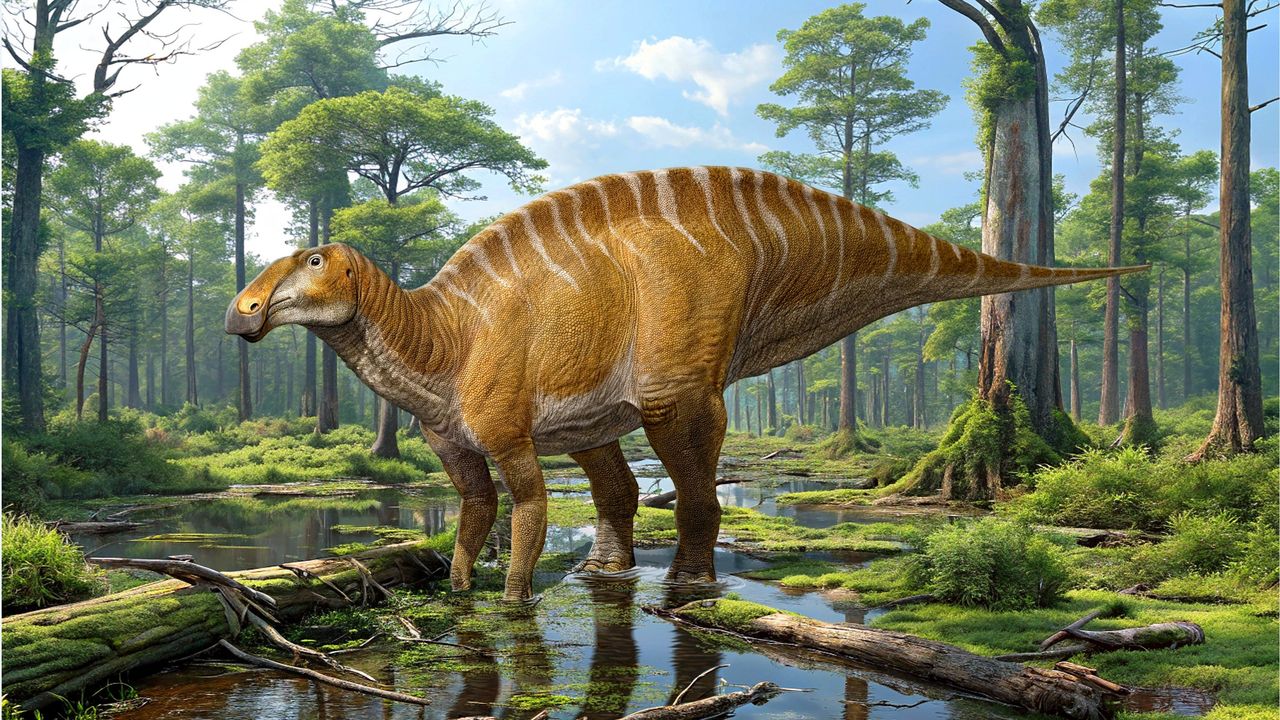
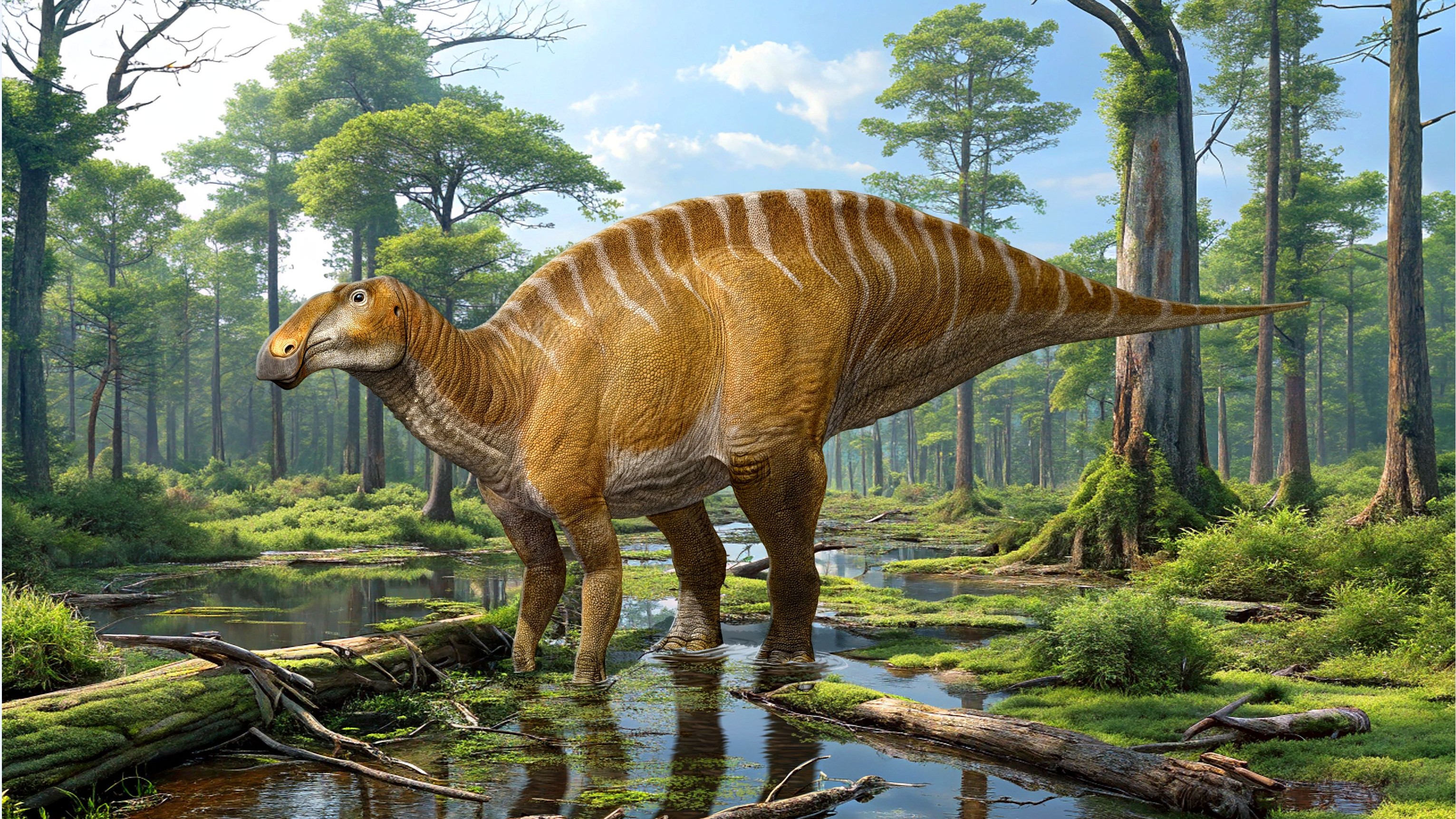 Artist impression of Ahshislesaurus wimani, a giant duck-billed dinosaur that lived approximately 75 million years ago.
(Image credit: Sergey Krasovskiy/Courtesy of NMMNHS)
Share
Share by:
Artist impression of Ahshislesaurus wimani, a giant duck-billed dinosaur that lived approximately 75 million years ago.
(Image credit: Sergey Krasovskiy/Courtesy of NMMNHS)
Share
Share by:
- Copy link
- X
Scientists have discovered an enormous species of duck-billed dinosaur that lived in what is now New Mexico about 75 million years ago.
The dinosaur, Ahshislesaurus wimani, likely had a flat head and a bony crest low on its snout, researchers revealed in a study. The findings, which is due to be published in the Bulletin of the New Mexico Museum of Natural History and Science, suggest that duck-billed dinosaurs, or hadrosaurids, were more diverse and overlapping during the last 20 million years of the Cretaceous period (145 million to 66 million years ago) than previously thought.
You may like-
 First-ever 'mummified' and hoofed dinosaur discovered in Wyoming badlands
-
 Rare fossils in New Mexico reveal dinosaurs were doing just fine before the asteroid annihilated them all
-
 Spinosaurus relative longer than a pickup truck stalked Thailand's rivers 125 million years ago
According to the statement, A. wimani could potentially have grown up to 40 feet (12 meters) long.
One set of A. wimani fossils discovered in 1916 were previously identified as a member of the hadrosaurid genus Kritosaurus. But existing fossil specimens are frequently being reevaluated as more data and fossils become available.
In the new study, the researchers revisited that set of fossils — including an incomplete skull, lower jawbone, and several vertebrae — from the Kirtland Formation in New Mexico. The fossils were housed at the Smithsonian National Museum of Natural History.
"As a general rule … skulls are really the basis for identifying differences in animals," study co-author Anthony Fiorillo, the executive director of the New Mexico Museum of Natural History and Science, said in a separate statement. "When you have a skull and you're noticing differences, that carries more weight than, say, you found a toe bone that looks different from that toe bone."
Sign up for the Live Science daily newsletter nowContact me with news and offers from other Future brandsReceive email from us on behalf of our trusted partners or sponsorsBy submitting your information you agree to the Terms & Conditions and Privacy Policy and are aged 16 or over.By comparing the skull to those of other hadrosaurids, the team found that its shape and features were distinct enough from other hadrosaurid skulls to suggest it was likely a different species. A. wimani is closely related to Kritosaurus, suggesting that their evolutionary lines had split not long before.
RELATED STORIES—Rare fossils reveal basketball-like skin on duck-billed dinosaur
—Teenage duck-billed dinosaurs struck out on their own, forming cliques
—Never-before-seen 'missing link' dinosaur walks, drinks and socializes in stunning new animation
"Kritosaurus is still a valid genus with species of its own," study co-author Edward Malinzak, a paleontologist at Penn State University Lehigh Valley, said in the second statement. "We took a specimen that was lumped in as an individual of Kritosaurus and determined it had significantly distinct anatomical features to warrant being its own genus and species."
It's not clear yet how the related species co-existed in the same environment, the researchers wrote in the study. But tracing the history and extent of different species could help scientists understand the environment they lived in, as well as the evolutionary history of duck-billed dinosaurs.
"The lineages appear to have co-existed in the region for a time," Malinzak said. "It showed that this group not only exploded with diversity across the continent at one point, but also contributed to the world-wide spread of this group in the Late Cretaceous."
 Skyler WareSocial Links NavigationLive Science Contributor
Skyler Ware is a freelance science journalist covering chemistry, biology, paleontology and Earth science. She was a 2023 AAAS Mass Media Science and Engineering Fellow at Science News. Her work has also appeared in Science News Explores, ZME Science and Chembites, among others. Skyler has a Ph.D. in chemistry from Caltech.
Show More CommentsYou must confirm your public display name before commenting
Please logout and then login again, you will then be prompted to enter your display name.
Logout Read more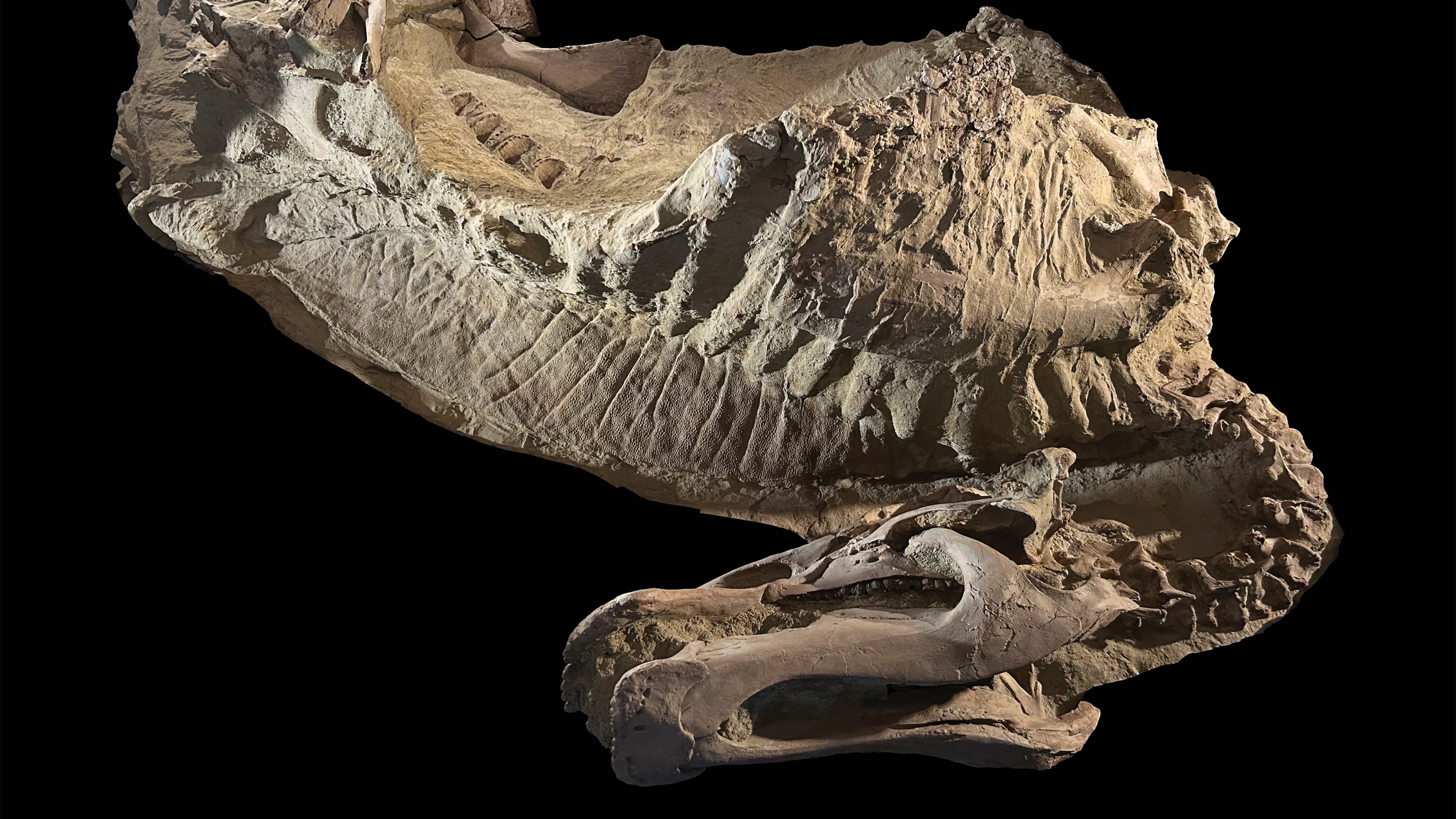 First-ever 'mummified' and hoofed dinosaur discovered in Wyoming badlands
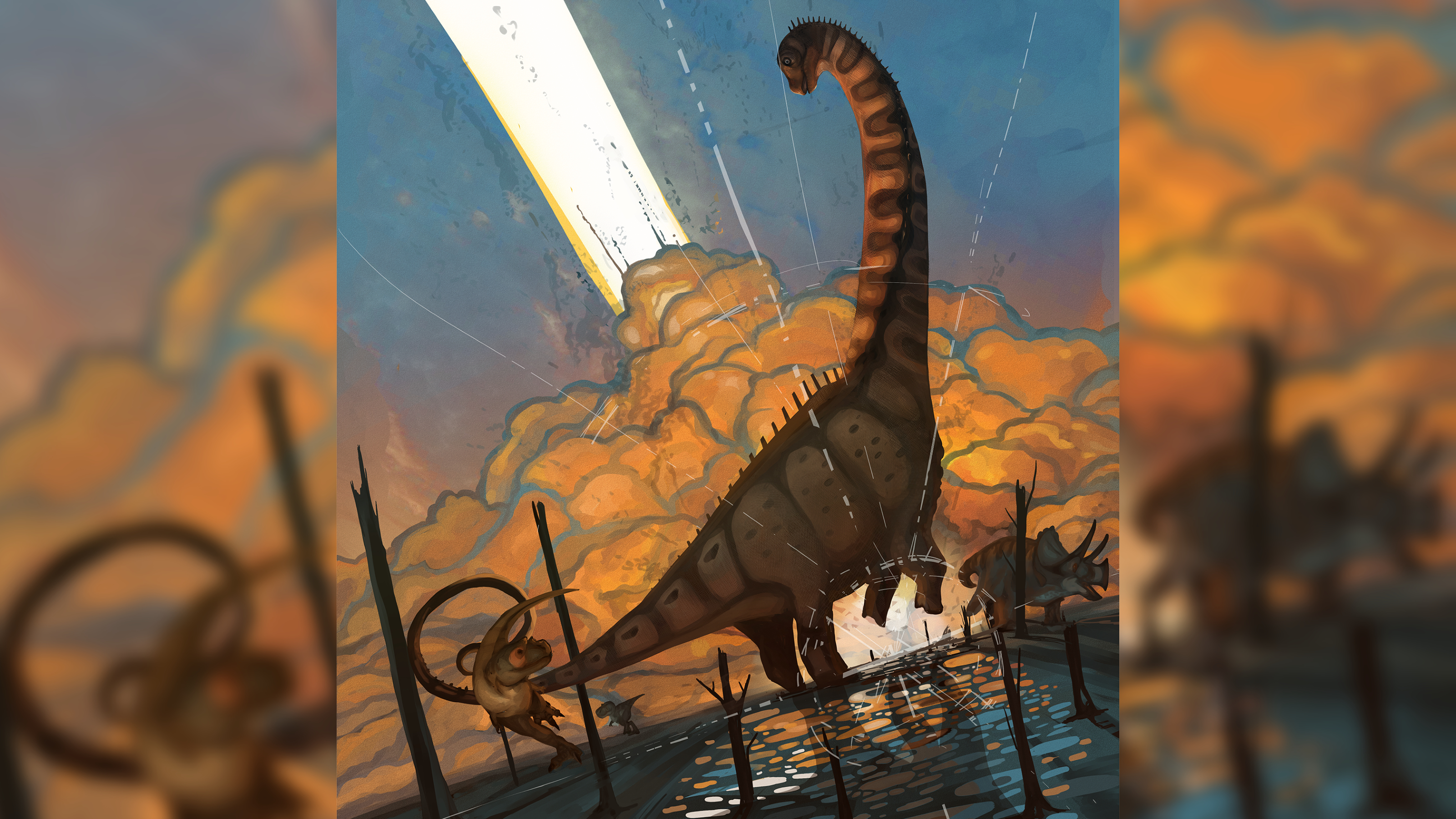 Rare fossils in New Mexico reveal dinosaurs were doing just fine before the asteroid annihilated them all
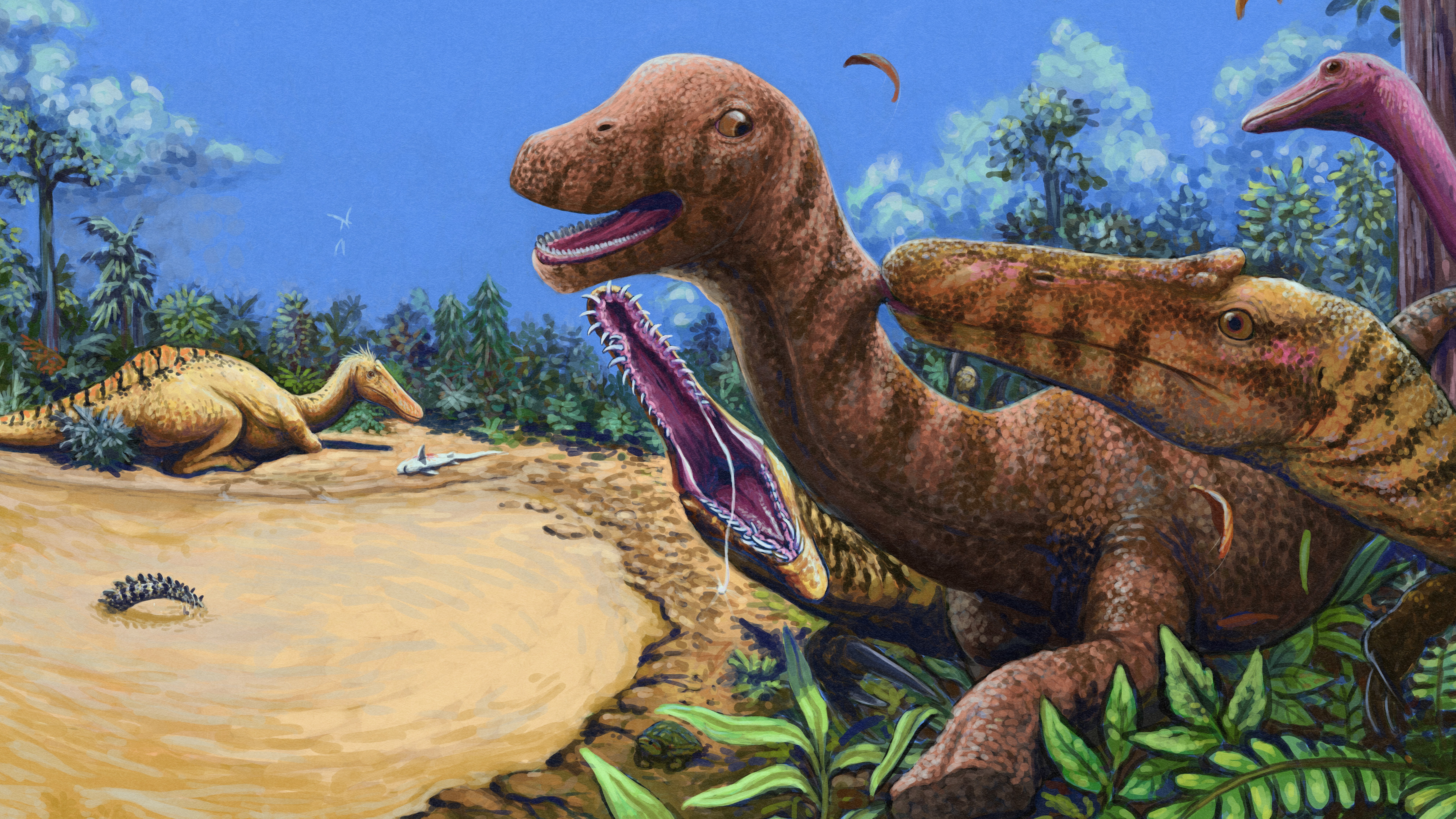 Spinosaurus relative longer than a pickup truck stalked Thailand's rivers 125 million years ago
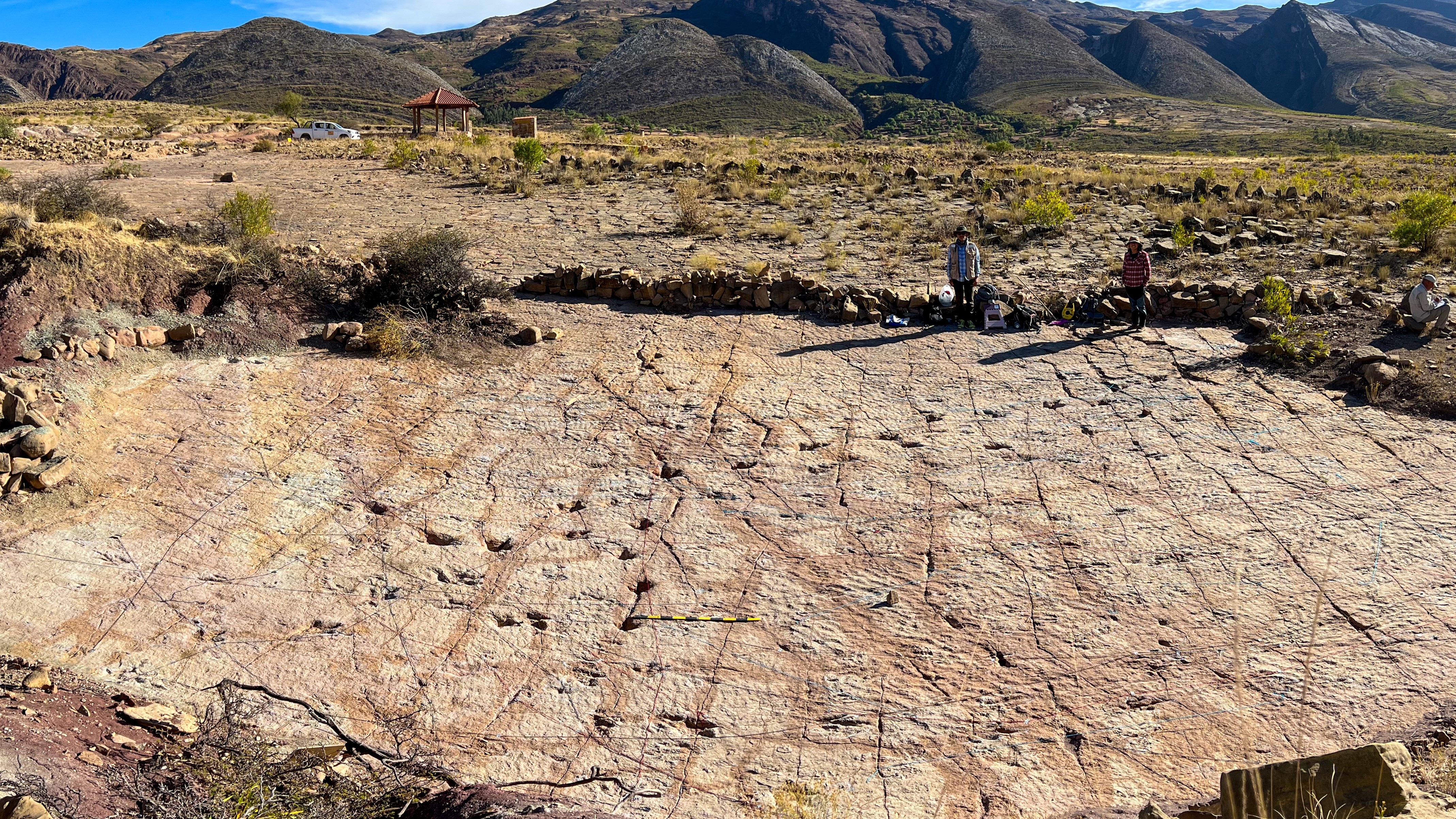 18,000 dinosaur tracks discovered along ancient Bolivian coastline — and they set a new record
 240 million-year-old 'warrior' crocodile ancestor from Pangaea had plated armor — and it looked just like a dinosaur
 Nanotyrannus isn't a 'mini T. Rex' after all — it's a new species, 'dueling dinosaurs' fossil reveals
Latest in Dinosaurs
Spinosaurus relative longer than a pickup truck stalked Thailand's rivers 125 million years ago
Nanotyrannus isn't a 'mini T. Rex' after all — it's a new species, 'dueling dinosaurs' fossil reveals
Latest in Dinosaurs
Spinosaurus relative longer than a pickup truck stalked Thailand's rivers 125 million years ago
 T. rex quiz: How much do you really know about the king of the dinosaurs?
18,000 dinosaur tracks discovered along ancient Bolivian coastline — and they set a new record
Nanotyrannus isn't a 'mini T. Rex' after all — it's a new species, 'dueling dinosaurs' fossil reveals
First-ever 'mummified' and hoofed dinosaur discovered in Wyoming badlands
Rare fossils in New Mexico reveal dinosaurs were doing just fine before the asteroid annihilated them all
Latest in News
T. rex quiz: How much do you really know about the king of the dinosaurs?
18,000 dinosaur tracks discovered along ancient Bolivian coastline — and they set a new record
Nanotyrannus isn't a 'mini T. Rex' after all — it's a new species, 'dueling dinosaurs' fossil reveals
First-ever 'mummified' and hoofed dinosaur discovered in Wyoming badlands
Rare fossils in New Mexico reveal dinosaurs were doing just fine before the asteroid annihilated them all
Latest in News
 'How can all of this be happening?': Scientists spot massive group of ancient galaxies so hot they shouldn't exist
 Advanced alien civilizations could be communicating 'like fireflies' in plain sight, researchers suggest
 The moon has been secretly feasting on Earth's atmosphere for billions of years
 US government overhauls the childhood vaccine schedule in unprecedented move
 1,100-year-old burials of elite warriors and their ornate weapons discovered in Hungary
 'Wolf Supermoon' gallery: See the first full moon of 2026 in pictures from across the world
LATEST ARTICLES
'Wolf Supermoon' gallery: See the first full moon of 2026 in pictures from across the world
LATEST ARTICLES 1Diagnostic dilemma: Giant 'stone' in a man's bladder looked like an ostrich egg
- 2'How can all of this be happening?': Scientists spot massive group of ancient galaxies so hot they shouldn't exist
- 3Advanced alien civilizations could be communicating 'like fireflies' in plain sight, researchers suggest
- 4What to buy to start a fitness journey (and save some money in the process)
- 5The moon has been secretly feasting on Earth's atmosphere for billions of years