- Space
- Astronomy
In its preliminary data release, taken from just seven nights of observations, the powerful Vera C. Rubin Observatory has discovered an enormous, fast-spinning asteroid that sets a new record.
When you purchase through links on our site, we may earn an affiliate commission. Here’s how it works.
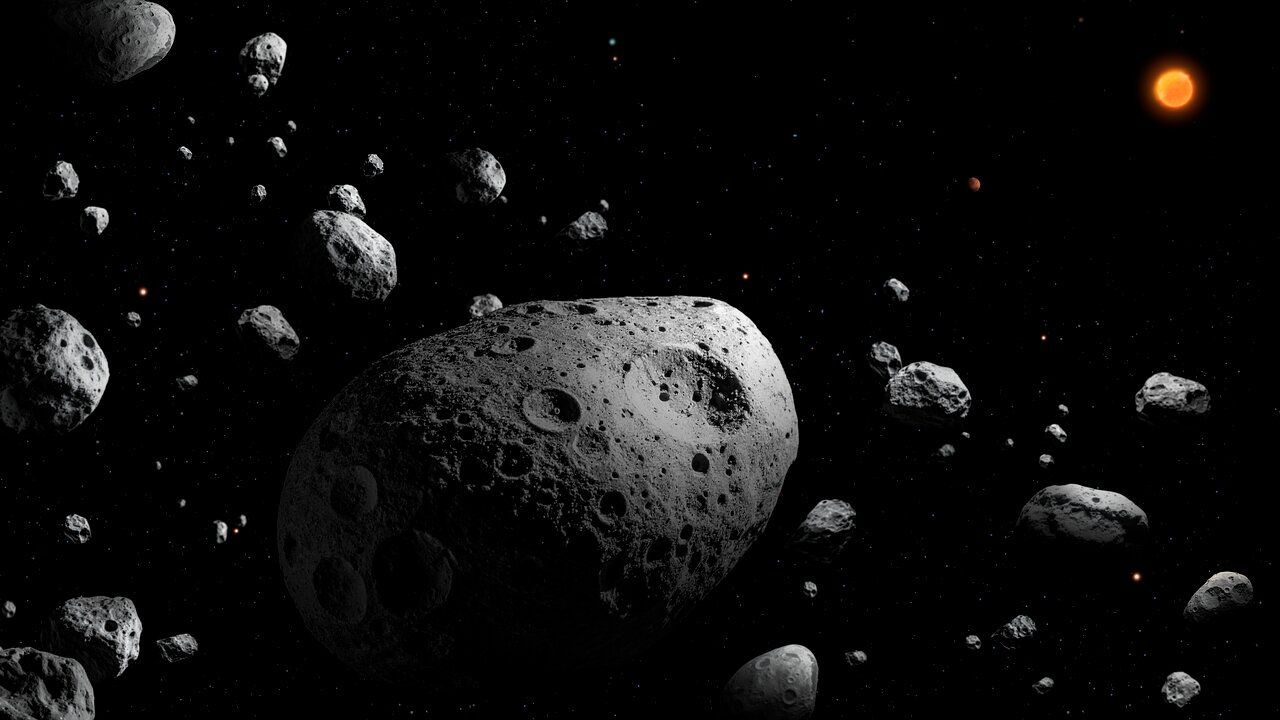
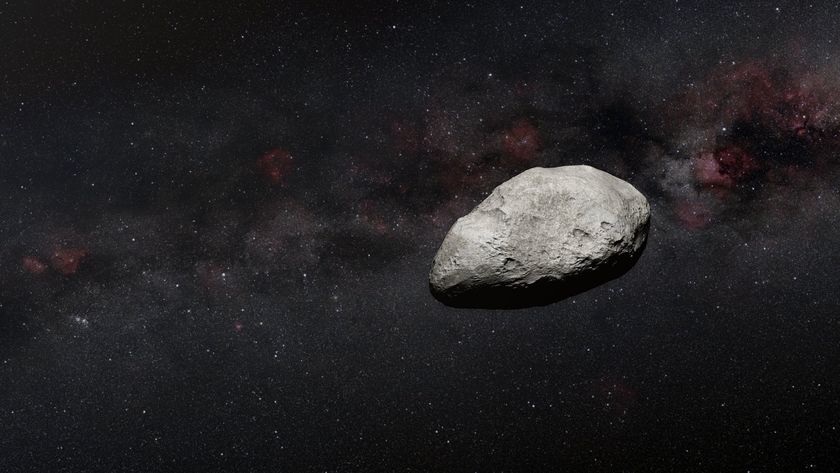
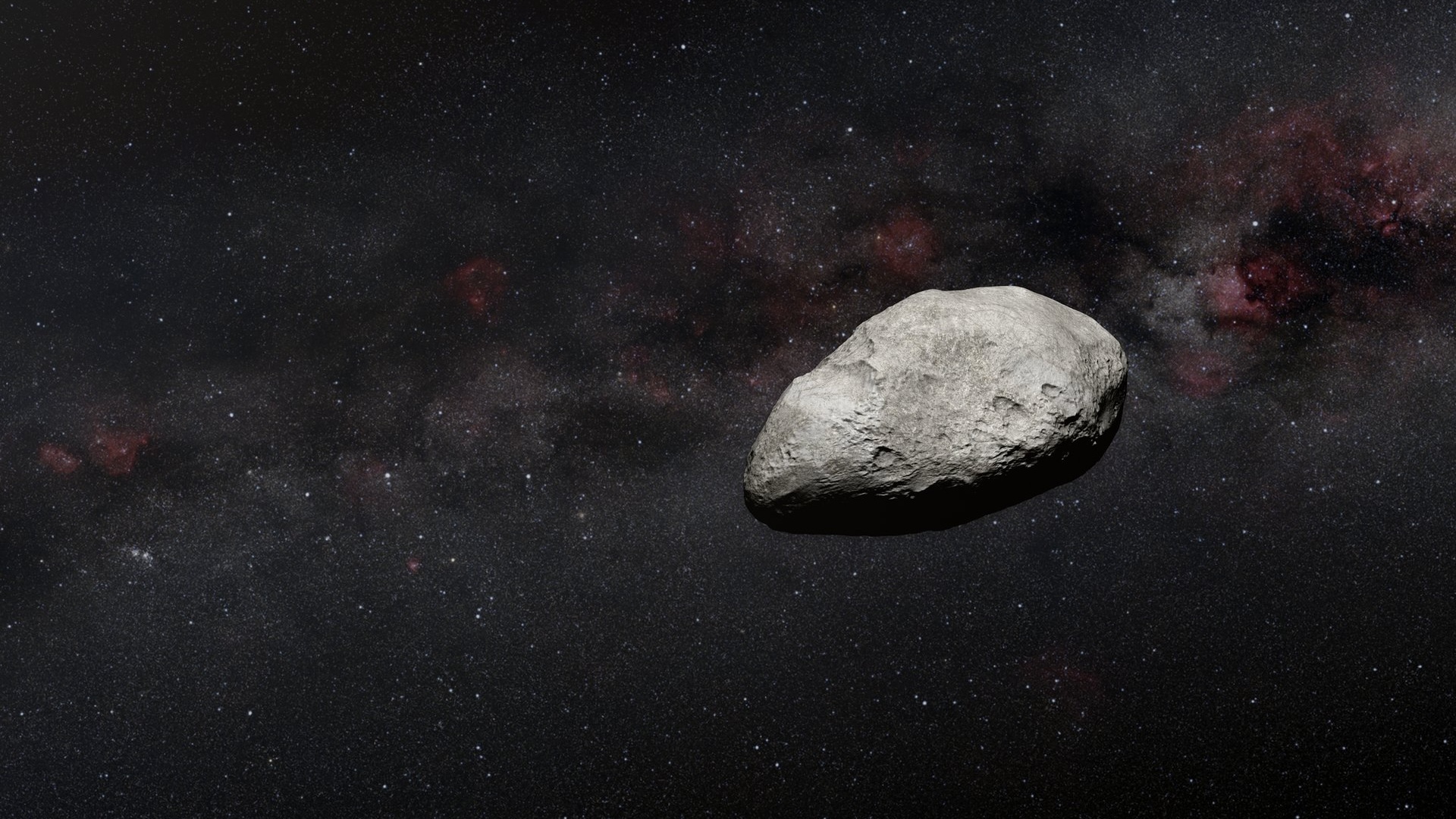
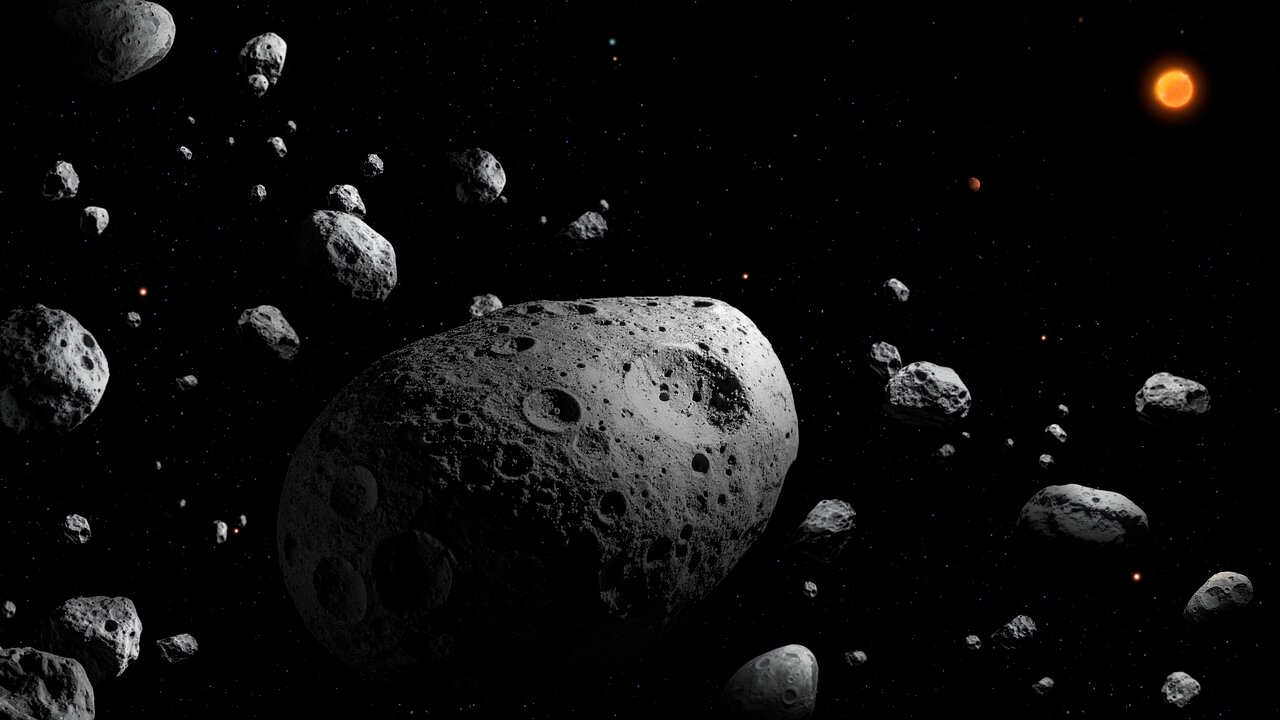 An artist’s illustration of the massive, fast-spinning asteroid 2025 MN45, discovered in the first data from the Vera C. Rubin Observatory.
(Image credit: NSF–DOE Vera C. Rubin Observatory/NOIRLab/SLAC/AURA/P. Marenfeld)
Share
Share by:
An artist’s illustration of the massive, fast-spinning asteroid 2025 MN45, discovered in the first data from the Vera C. Rubin Observatory.
(Image credit: NSF–DOE Vera C. Rubin Observatory/NOIRLab/SLAC/AURA/P. Marenfeld)
Share
Share by:
- Copy link
- X
Scientists analyzing the first images from the Vera C. Rubin Observatory have discovered the fastest-spinning asteroid in its size class yet.
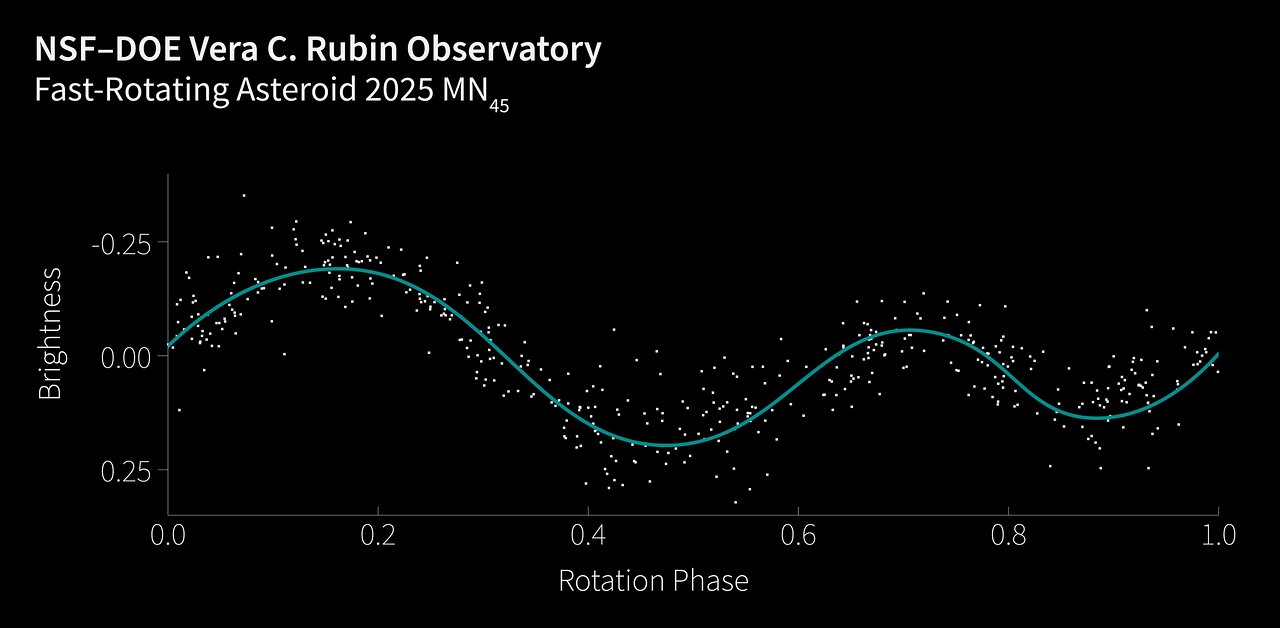
The record-breaking space rock, called 2025 MN45, is larger than most skyscrapers on Earth at about 2,300 feet (710 meters) wide. The massive rock completes a rotation in about 113 seconds — making it the fastest-spinning known asteroid over 1,640 feet (500 meters) in diameter.
You may like-
 Astronomers discover skyscraper-size asteroid hidden in sun's glare
-
 Giant rotating string of galaxies is 'probably the largest spinning object' in the known universe
-
 'Potentially hazardous' asteroid 2024 YR4 was Earth's first real-life planetary defense test
The study is the first peer-reviewed paper from the Rubin Observatory's LSST Camera — the largest digital camera in the world — which will repeatedly scan the Southern Hemisphere's night sky over 10 years to create an unprecedented time-lapse movie of the universe.
Rocks that roll
Asteroids are essentially large space rocks, and many are remnants of how our solar system appeared early in its 4.5 billion-year-old history, before the evolution of planets and moons. Therefore, by studying asteroids, scientists can figure out how our solar system changed over the eons.
Scientists found 2025 MN45 using the preliminary data release from the Rubin Observatory, which has already revealed thousands of previously unknown asteroids around the solar system after just seven nights of observations. (The 10-year LSST survey has yet to formally begin, but is expected to start in the next few months.)
The asteroid's remarkably fast spin excited the team, as it provides clues about the ancient rock’s composition.
Sign up for the Live Science daily newsletter nowContact me with news and offers from other Future brandsReceive email from us on behalf of our trusted partners or sponsorsBy submitting your information you agree to the Terms & Conditions and Privacy Policy and are aged 16 or over."Clearly, this asteroid must be made of material that has very high strength in order to keep it in one piece," Sarah Greenstreet, an assistant astronomer at the National Science Foundation's National Optical-Infrared Astronomy Research Laboratory, said in a statement. "It would need a cohesive strength similar to that of solid rock."
"This is somewhat surprising," added Greenstreet, who also leads a Rubin working group about near-Earth objects and interstellar objects, "since most asteroids are believed to be what we call 'rubble pile' asteroids, which means they are made of many, many small pieces of rock and debris that coalesced under gravity during solar system formation or subsequent collisions."
Thousands more to come
In general, fast-spinning asteroids could have reached that state after a collision with another space rock, the study team said. It is also possible that 2025 MN45 is a remnant of a much larger asteroid that was shattered by a cosmic crash.
You may like-
Astronomers discover skyscraper-size asteroid hidden in sun's glare
-
Giant rotating string of galaxies is 'probably the largest spinning object' in the known universe
-
'Potentially hazardous' asteroid 2024 YR4 was Earth's first real-life planetary defense test
Most asteroids in the solar system are in the main asteroid belt between Mars and Jupiter. But most fast-spinning asteroids that astronomers have observed are much closer to Earth, simply because they are easier to see, the study authors noted. 2025 MN45 is a main-belt object, where most asteroids (as they are loose piles of rubble) must take at least 2.2 hours to rotate in order to avoid fragmentation. Anything that rotates faster than that "must be structurally strong," they wrote.
That said, 2025 MN45 is not the only fast spinner in the main asteroid belt. In addition to 2025 MN45, Rubin's first dataset includes 16 "super-fast" rotators, each of which has a rotational period of between 13 minutes and 2.2 hours, as well as two "ultra-fast" rotators with spins of less than two minutes each. All of these asteroids are also longer than 100 yards (90 m), and all but one of the newfound asteroids lives in the main belt.
related stories—Scientists discover fast-spinning 'unicorn' object that defies physics
—Asteroid that exploded over Berlin was fastest-spinning space rock ever recorded
—We may finally know why spinning-top asteroid Ryugu has such a weird shape
The commissioning data from Rubin, which was released last June, underwent a deeper look in the new paper, which was also discussed Wednesday at a news conference at the 247th meeting of the American Astronomical Society in Phoenix.
The huge set of observations has about 1,900 never-before-seen asteroids, according to the statement. There will be many more to come when Rubin formally begins its 10-year survey of the sky in the coming months.
 Elizabeth HowellLive Science Contributor
Elizabeth Howell was staff reporter at Space.com between 2022 and 2024 and a regular contributor to Live Science and Space.com between 2012 and 2022. Elizabeth's reporting includes multiple exclusives with the White House, speaking several times with the International Space Station, witnessing five human spaceflight launches on two continents, flying parabolic, working inside a spacesuit, and participating in a simulated Mars mission. Her latest book, "Why Am I Taller?" (ECW Press, 2022) is co-written with astronaut Dave Williams.
Show More CommentsYou must confirm your public display name before commenting
Please logout and then login again, you will then be prompted to enter your display name.
Logout Read more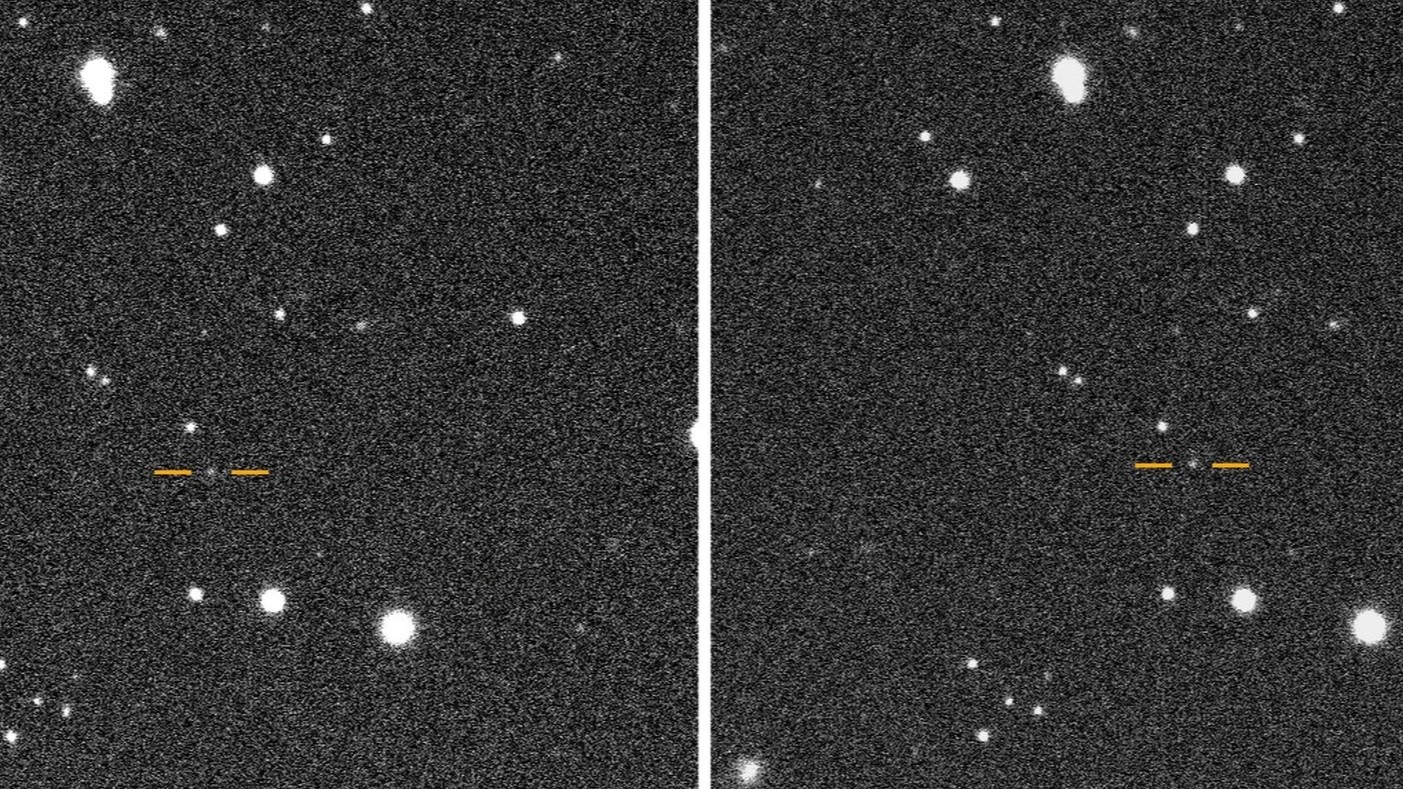 Astronomers discover skyscraper-size asteroid hidden in sun's glare
 Giant rotating string of galaxies is 'probably the largest spinning object' in the known universe
 'Potentially hazardous' asteroid 2024 YR4 was Earth's first real-life planetary defense test
 'A scale almost too big to imagine': Scientists spot monster black hole roaring with winds at more than 130 million mph
 Strange, 7-hour explosion from deep space is unlike anything scientists have seen — Space photo of the week
 Record-breaking 'dark object' found hiding within a warped 'Einstein ring' 10 billion light-years away
Latest in Astronomy
Record-breaking 'dark object' found hiding within a warped 'Einstein ring' 10 billion light-years away
Latest in Astronomy
 NASA telescope combines 100 maps of the universe into one, promising huge discoveries
 'How can all of this be happening?': Scientists spot massive group of ancient galaxies so hot they shouldn't exist
 The moon has been secretly feasting on Earth's atmosphere for billions of years
 'Wolf Supermoon' gallery: See the first full moon of 2026 in pictures from across the world
 Quadrantid meteor shower peaks this week: How to see the first 'shooting' stars of the year
 NASA spacecraft takes milestone 100,000th image of Mars (photo)
Latest in News
Vera C. Rubin Observatory discovers enormous, record-breaking asteroid in first 7 nights of observations
NASA spacecraft takes milestone 100,000th image of Mars (photo)
Latest in News
Vera C. Rubin Observatory discovers enormous, record-breaking asteroid in first 7 nights of observations
 New US food pyramid recommends very high protein diet, beef tallow as healthy fat option, and full-fat dairy
 Rare 2,000-year-old war trumpet, possibly linked to Celtic queen Boudica, discovered in England
 Leonardo da Vinci's DNA may be embedded in his art — and scientists think they've managed to extract some
 9,500-year-old cremation pyre of a hunter-gatherer woman is the oldest of its kind in the world
 One of the last Siberian shamans was an 18th-century woman whose parents were related, DNA study reveals
LATEST ARTICLES
One of the last Siberian shamans was an 18th-century woman whose parents were related, DNA study reveals
LATEST ARTICLES- 1New US food pyramid recommends very high protein diet, beef tallow as healthy fat option, and full-fat dairy
- 2Rare 2,000-year-old war trumpet, possibly linked to Celtic queen Boudica, discovered in England
- 360,000-year-old poison arrows from South Africa are the oldest poison weapons ever discovered
- 4Leonardo da Vinci's DNA may be embedded in his art — and scientists think they've managed to extract some
- 5NASA telescope combines 100 maps of the universe into one: 'every astronomer is going to find something of value here'